AML Transaction Monitoring System
Stop reviewing false positives. Catch real money laundering, not noise.
Proven economic impact
“Sumsub’s transaction monitoring is very valuable. It provides us with real-time visibility into high-risk and suspicious transactions, which enables us to stay compliant.”
— Financial Crime Team Leader, Fintech (Forrester TEI Study, 2025)
Minimize risk and adapt
to evolving regulations
AML Transaction Monitoring
System features
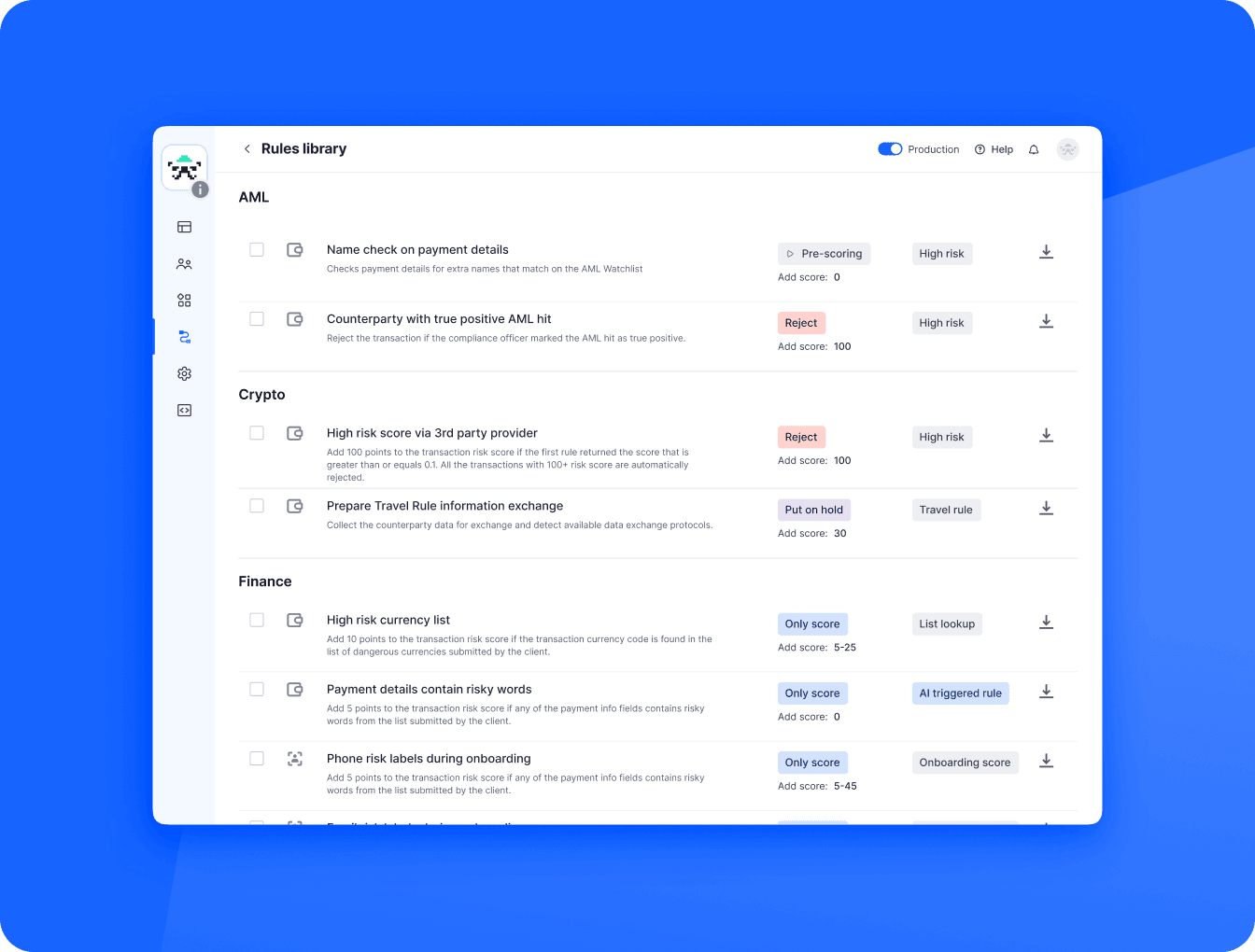
Rule bundles for every scenario
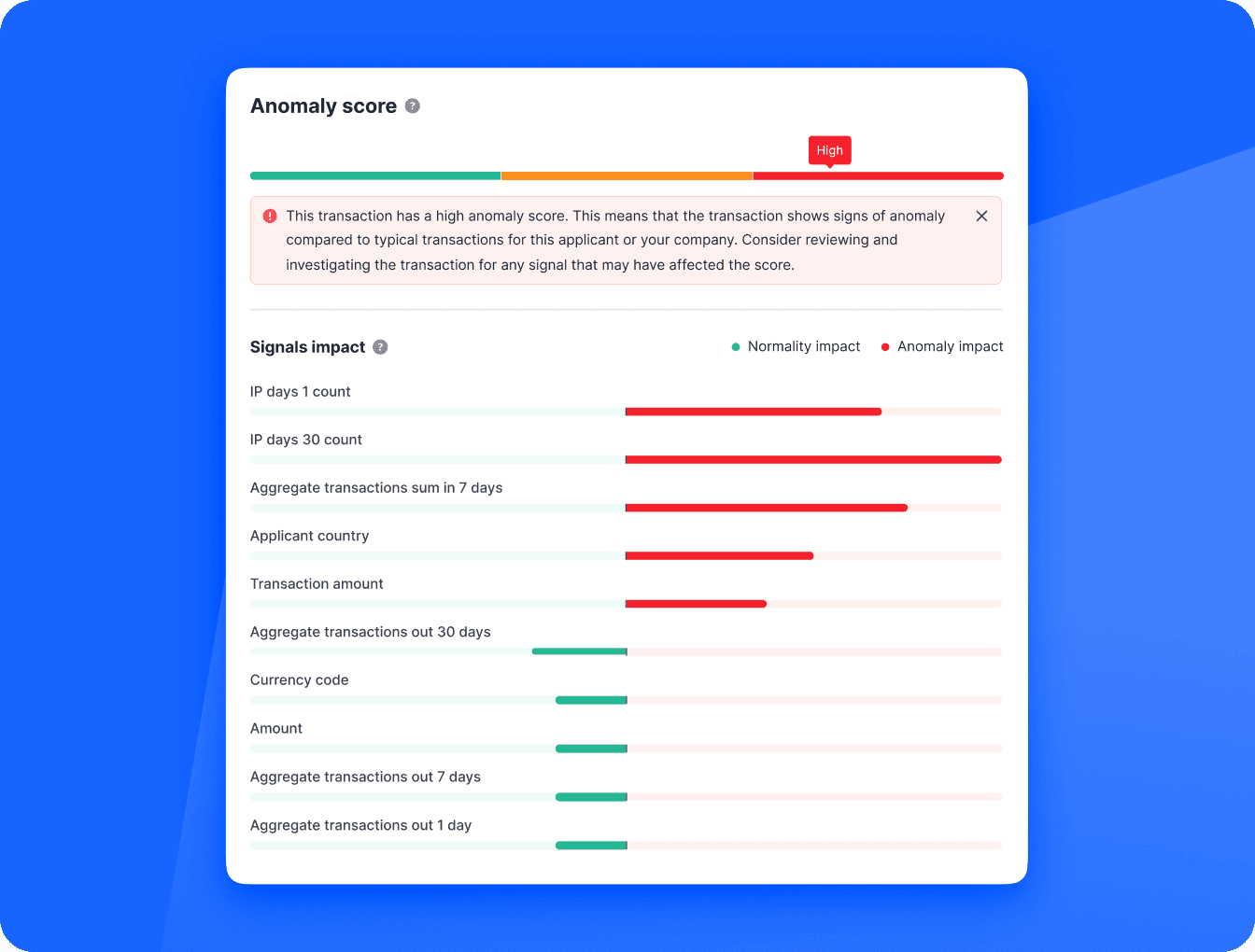
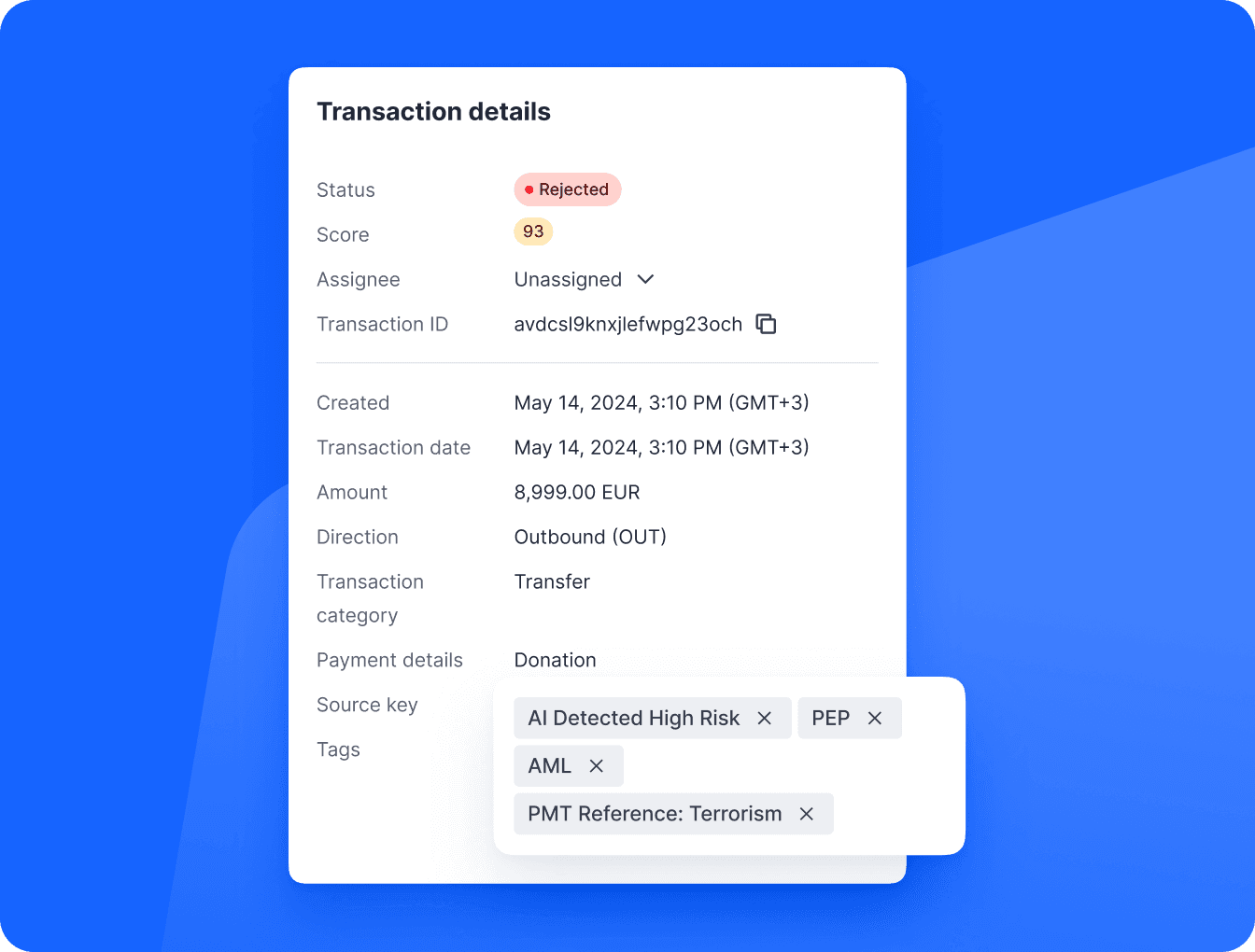
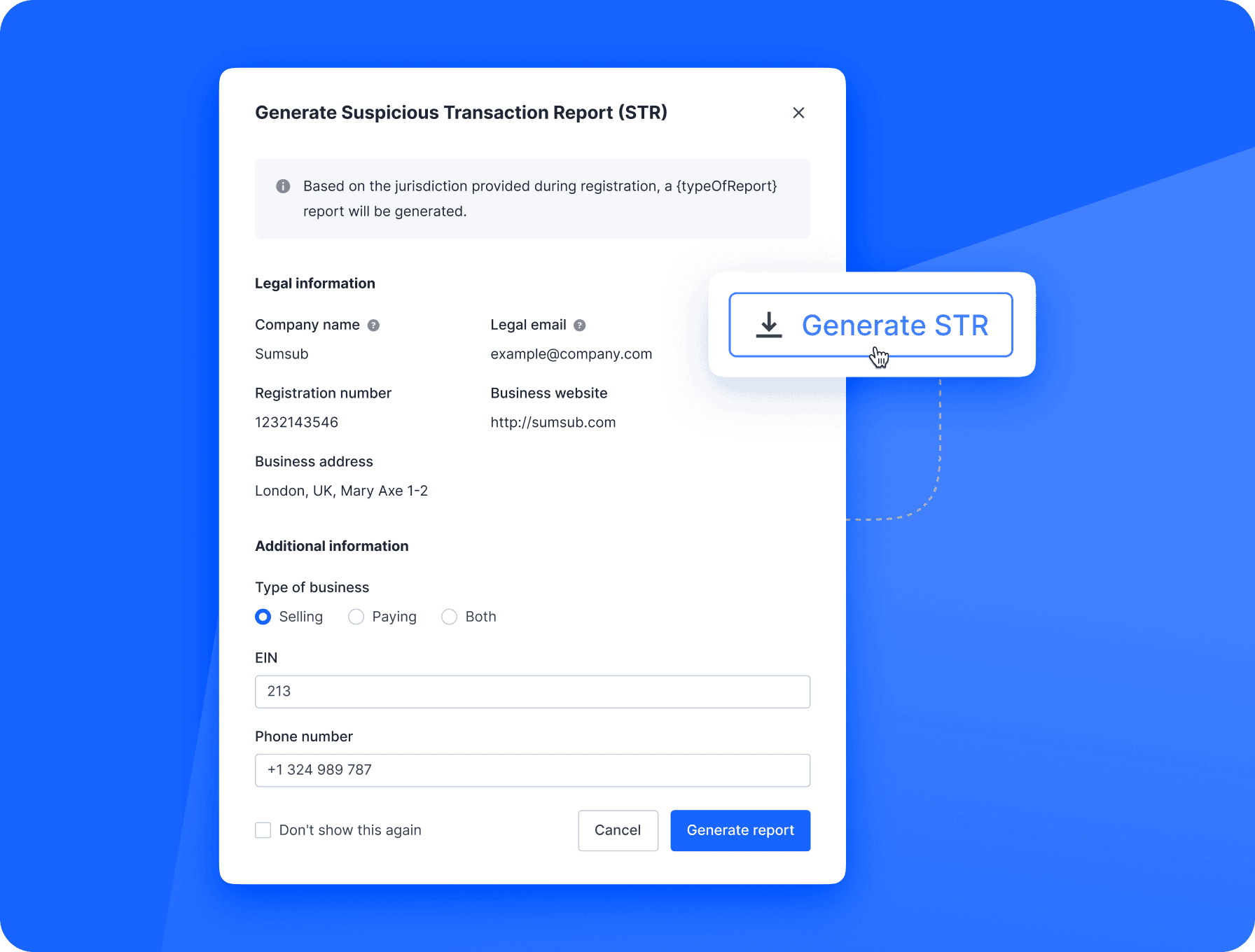
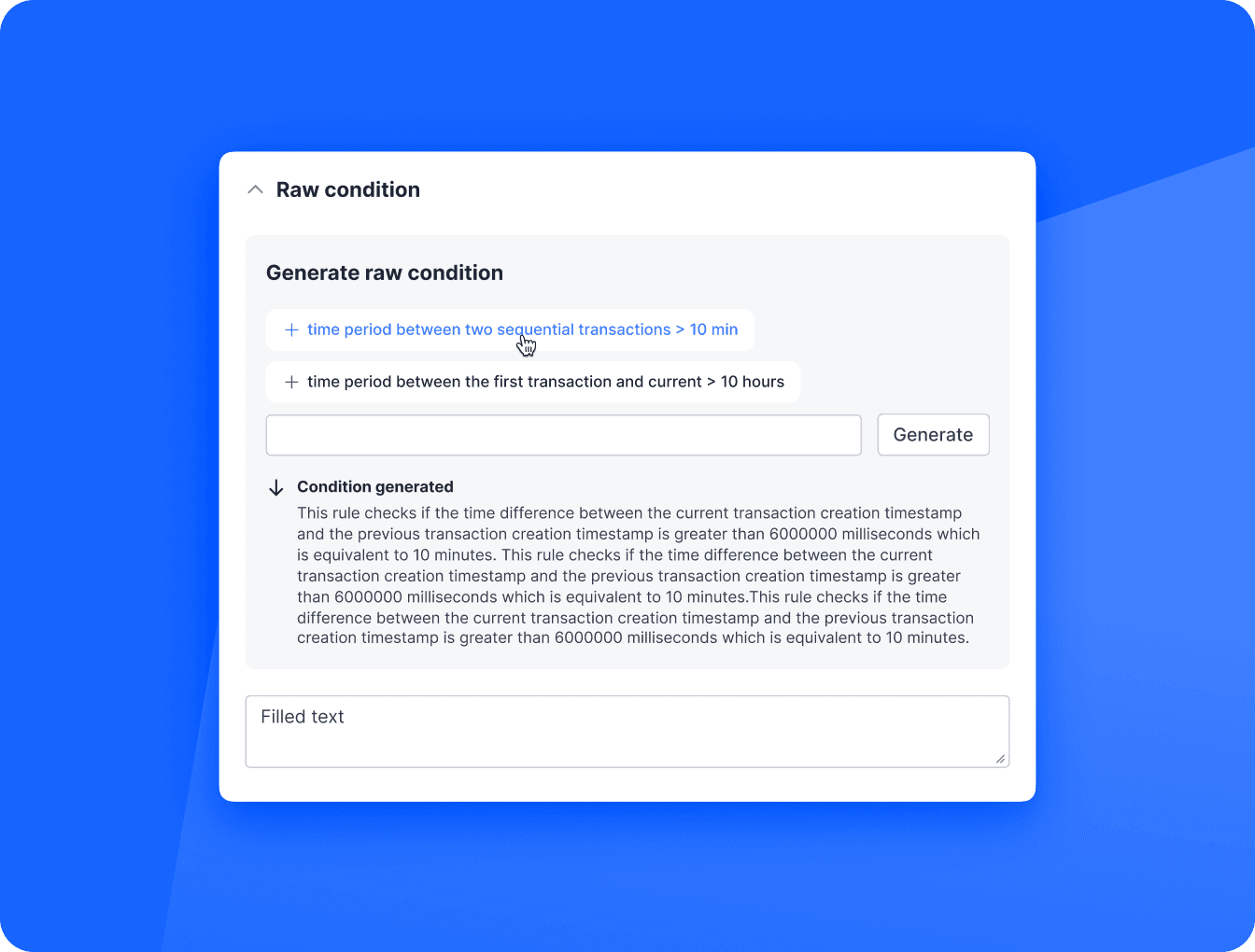
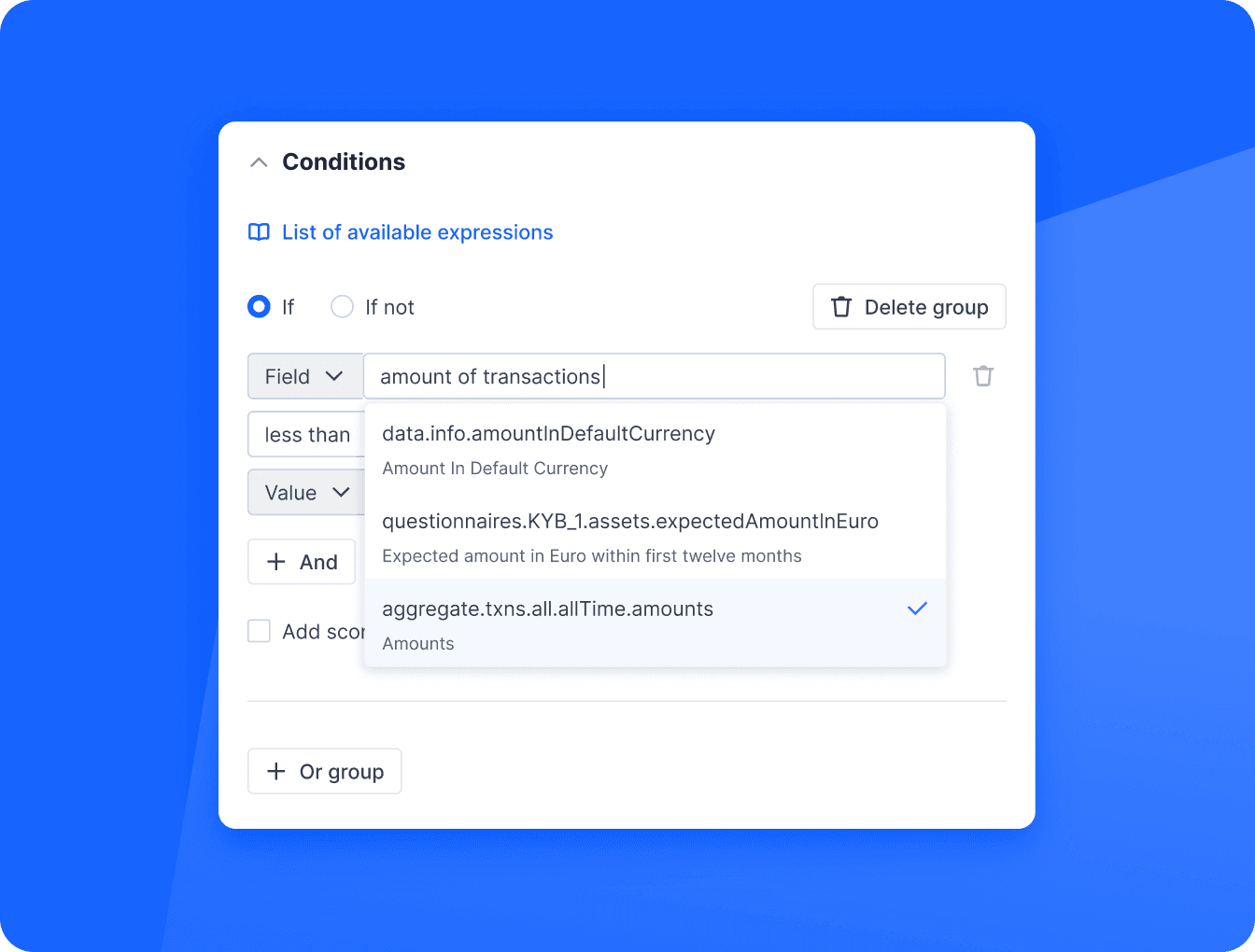
Rules that write themselves. Alerts that actually mean something
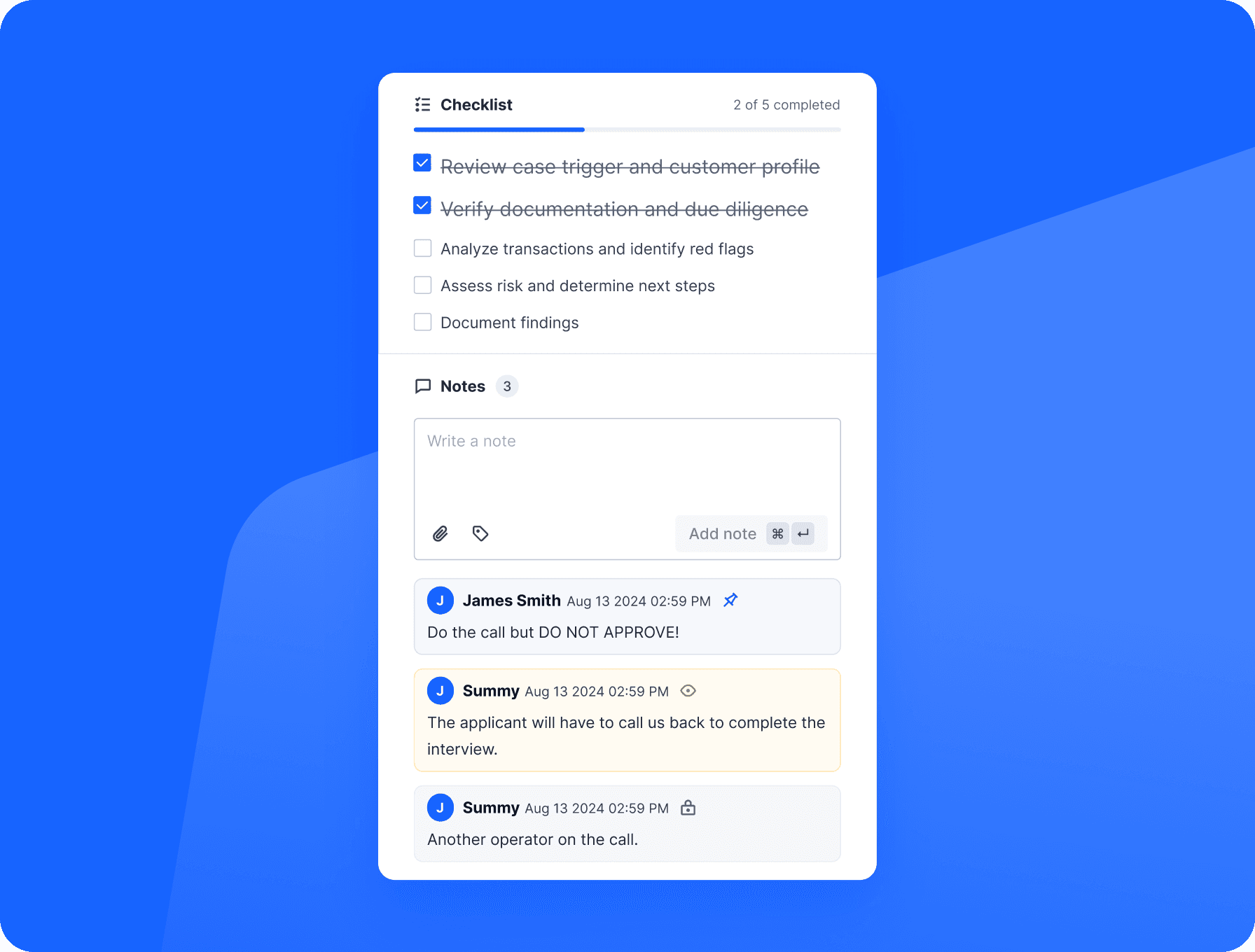
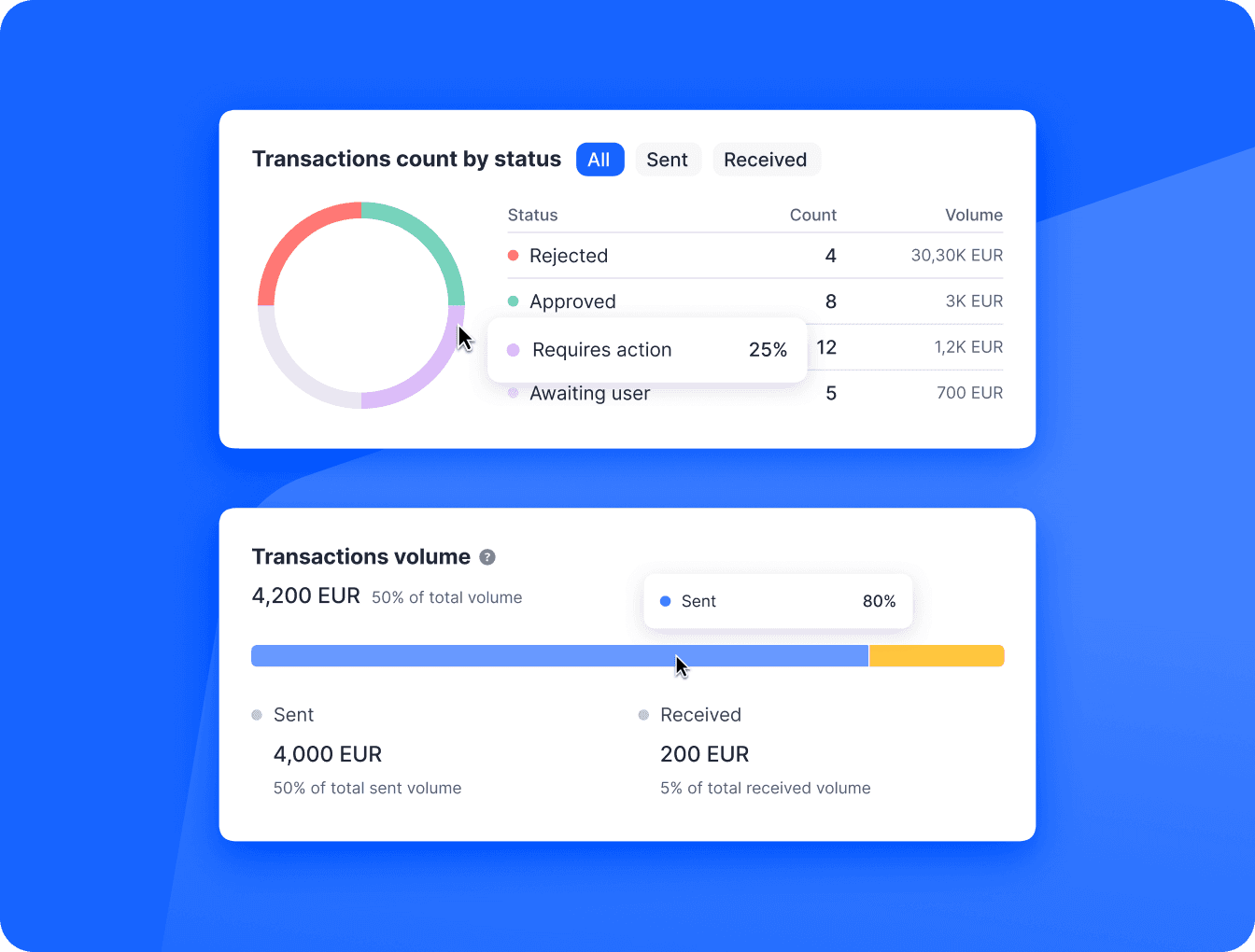
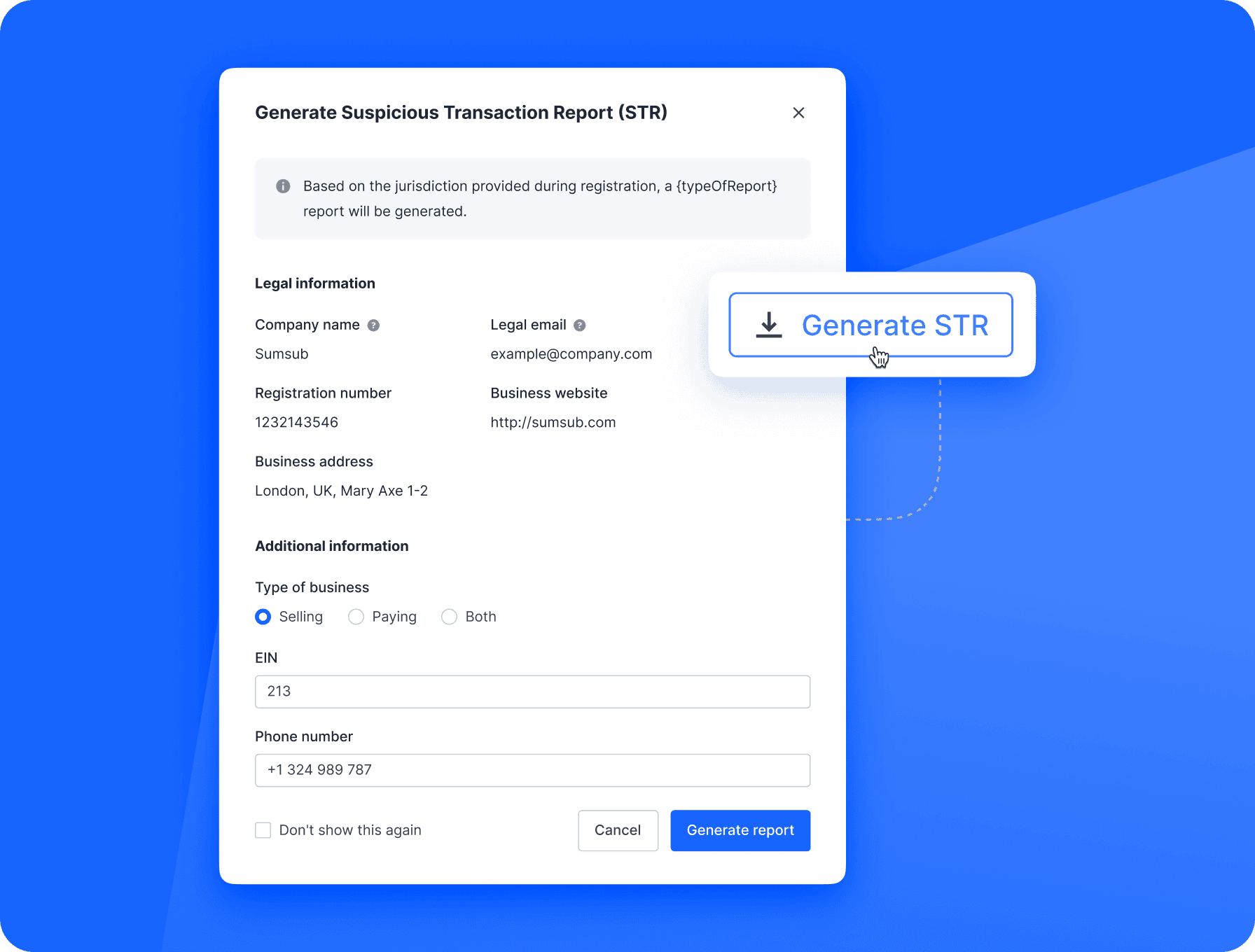
One place to investigate, decide, and file, so nothing falls through the cracks
How much could you be
saving with Sumsub?
AML Transaction
Monitoring tool works
- User Verification & ScreeningBeyond standard KYC, identity checks adapt to transaction patterns.
- Risk Evaluation & Ongoing MonitoringReal-time scoring adjusts risk levels based on transactions and user activity.
- Alerts & Case CreationSuspicious activity triggers automatic alerts and workflows for timely reviews.
- Investigation & ReportingInvestigatory actions, evidence collection, and decisions are thoroughly recorded.
Don’t take our word for it.
Here’s what our clients have to say
- The platforms we had before worked fine at an individual level, but they didn’t work well from a holistic risk management and efficiency point of view. I needed a helicopter view of what was happening, and I simply could not get that from the setup we had.
 Chet ShahGlobal Chief Risk & Compliance Office at Wirex
 - The platform’s workflow functionality provided a flexible framework that addressed our current needs while instilling confidence that it could adapt to future requirements. Sumsub’s customizable checks with bespoke rules and ongoing monitoring allowed us to manage costs effectively, tailoring checks to the specific risks while meeting legal requirements across different jurisdictions.
 Steve JablonskiVice President of Information Security at TELUS Digital
 - Sumsub has demonstrated a strong willingness to listen to our needs, actively evolve their solution, and respond to feedback by implementing improvements quickly. We look forward to continuing and strengthening this collaborative relationship in the future.
 Mike KayamoriCEO at ORO Bank, Sumsub and Finastra’s first mutual partner
 - We chose Sumsub because of their broad product offering and their focus on user experience. They’re constantly innovating to make the process smoother and reduce friction for our customers, which was exactly what we were looking for. We’re using Sumsub’s Transaction Monitoring, and it provides us with industry-standard risk scoring across our transactions.
 James O’NeillHead of Legal & Compliance at Blueberry
Award-winning AML Transaction Monitoring to keep your business compliant and future-ready

Leading Vendor of AML Transaction Monitoring
Liminal named Sumsub as a Leading Vendor of AML Transaction Monitoring

Top Global Technology Provider
Sumsub recognized as one of the top 20 global technology providers of the Financial Crime and Compliance50 (FCC50) report by Chartis

A Leader in Fraud Detection & Anti-Money Laundering
G2 2024 Identity Verification Winter Report

Overall Leader
Sumsub’s Fraud Prevention is recognized as an Overall Leader by KuppingerCole Analysts
Resources



FAQ
How to monitor transactions in AML?
Transaction monitoring means reviewing customer activity on an ongoing basis to spot behaviour that does not fit what you know about that customer. It is a legal requirement, not an optional extra. In jurisdictions that have implemented the FATF standards, firms have to monitor transactions throughout a customer relationship and keep what they know about the customer up to date.
In practice it works as a loop:- Set your scenarios and thresholds based on your own risk assessment
- Feed in transaction, customer and counterparty data, including attempted and declined transactions
- Let the system flag patterns that do not fit, such as structuring, funds passing straight through an account, or activity that does not match the stated purpose of the relationship
- Have an analyst review the alert in context
- Escalate concerns to your MLRO or equivalent designated officer, who decides whether the firm reports
- Keep the records, refresh the customer’s risk rating where the activity warrants it, and tune your scenarios over time
Suspicion is not something a system can conclude on your behalf. Software does the flagging. People do the deciding, and accountability sits with your designated officer.What are the key components of a transaction monitoring system?
A reliable system needs all of the following:
- Clean data going in. Most monitoring failures start here. A scenario cannot catch what it never received, so data completeness and mapping matter more than how sophisticated the detection is.
- Configuration that reflects your risk. Scenarios, thresholds and customer segments set against your own risk assessment rather than vendor defaults, with change control and independent sign-off on every amendment.
- Detection that looks past single transactions. Rules for known typologies, behavioural analytics for patterns that rules cannot express, and network analysis to surface links between accounts. Alerts can also come from outside the system, for example when a screening hit prompts a look back at activity. Whatever the method, you need to be able to explain why an alert fired.
- Case management. An alert gets raised, then investigated. Suspicion is what an investigation concludes, not what sets it off.
- A clear escalation route. Staff need to know how to raise a concern, and your MLRO or compliance officer needs to be the one deciding whether it goes to the authorities.
- Reporting built for your markets. Every financial intelligence unit has its own format, portal and deadline. Some regimes require authorisation before you can go ahead with a transaction you have reported. And everywhere, you are prohibited from telling the customer that a report has been filed, while equally protected from liability when you report in good faith.
- An audit trail, and the means to tune. Which scenario fired, on what data, who looked at it, what they decided and why, and who approved each change. Plus the ability to test above and below your thresholds to show your calibration is working.
What is the best transaction monitoring software?
There is no single best. The rules are risk-based by design, so the right system depends on what you sell, who you sell to, where you operate and how much volume you handle. What suits a single-market e-money issuer will not stretch to a multi-jurisdiction payments business, and what a global bank runs would bury a smaller trading platform.
What good systems have in common:- Detection that matches your typologies, rather than a generic template
- Explainable alerts, so your analyst can say why one fired and your investigator can write something that holds up
- Tuning you can evidence, including alert precision data and a documented method for changing thresholds
- An audit trail you can reproduce months later: the rule, the data, the reviewer, the rationale, the approvals
- Timing matched to the control. Sanctions screening runs before a payment leaves. Behavioural monitoring usually runs in batch or near real time, because the patterns that matter build up over days and across accounts. Real-time decisioning earns its place where you need to hold funds before settlement on instant rails, but that is a commercial and risk appetite decision. What regulators ask for is prompt reporting once suspicion forms.
- Reporting that fits each market you file in. The clocks vary considerably. Some regimes require a report within a day of suspicion being formed, and cap how long the internal review that gets you there can take. Others allow a month or more from the point of detection. Some supervisors add an expected window from alert to filing on top of a statutory duty to report without delay. A single global default setting will breach the tightest of them.
How to choose a transaction monitoring tool?
Assess vendors against:
- Coverage and configurability. Which typologies does it cover for your sector and markets? Look for a scenario library you can start from and then tune to your own risk assessment.
- Explainability and human oversight. Can an analyst see why an alert was raised? Where machine learning is involved, can the output be explained to a regulator? The system prioritises the work. Real people make the call.
- Alert quality. Ask for precision data, not throughput figures. Your real constraint is alert volume against analyst capacity, not transactions processed.
- Testing before you go live. Can you backtest new scenarios against historical data and simulate the alert volume a threshold change would produce? This is what turns tuning into something you can evidence.
- What it knows about your customers. Monitoring works far better when it draws on your onboarding and customer risk data, so activity is judged against what you already know rather than in isolation.
- Multi-market operation. Reporting workflows and deadlines configurable per market, support for local filing formats and portals, local language handling, and different rule sets for different entities without running separate systems.
- Data residency and retention. Where is data processed and stored, and does that satisfy local data protection and localisation requirements in each market? The FATF baseline is five years for transaction and customer records, and several jurisdictions require longer, so retention needs to be configurable rather than fixed.
- Pre-transaction controls, described accurately. Real-time controls can hold or decline a payment. They cannot prevent suspicion, which is a human assessment. Where you hold a payment on money laundering grounds, local law decides what happens next, and in several jurisdictions you need authorisation before proceeding. Restrictions on what you can tell the customer apply throughout. A tool should support that workflow, not claim to remove it.
- Getting live. Implementation timelines, migration from your existing system, and whether you can run both in parallel long enough to compare outputs before you switch.
- The vendor itself. Viability, support model, service levels, and where the product is heading. You are buying a relationship that has to survive you next audits, not just a piece of software.