Financial crime prevention for banks
AI-powered trust infrastructure for banking
Trusted by the largest banks and PSPs on 6 continents
Built for your banking model
Traditional banks and digital banks face different growth, infrastructure, and risks.
Select the setup for your strategy.
- Add controls to existing journeys:Modernize risk controls without disrupting your stack. Add onboarding, fraud, AML, transaction monitoring, FIU reporting, and digital-asset controls in layers — without replacing existing systems from day one.
- Prepare for tokenized banking:Assess stablecoin flows, wallet exposure, Travel Rule obligations, and blockchain-linked risk before they land on your balance sheet.
- Keep decisions audit-ready:Shared evidence, decision logs, audit trails, and FIU reporting support, all easily accessible from your dashboard.
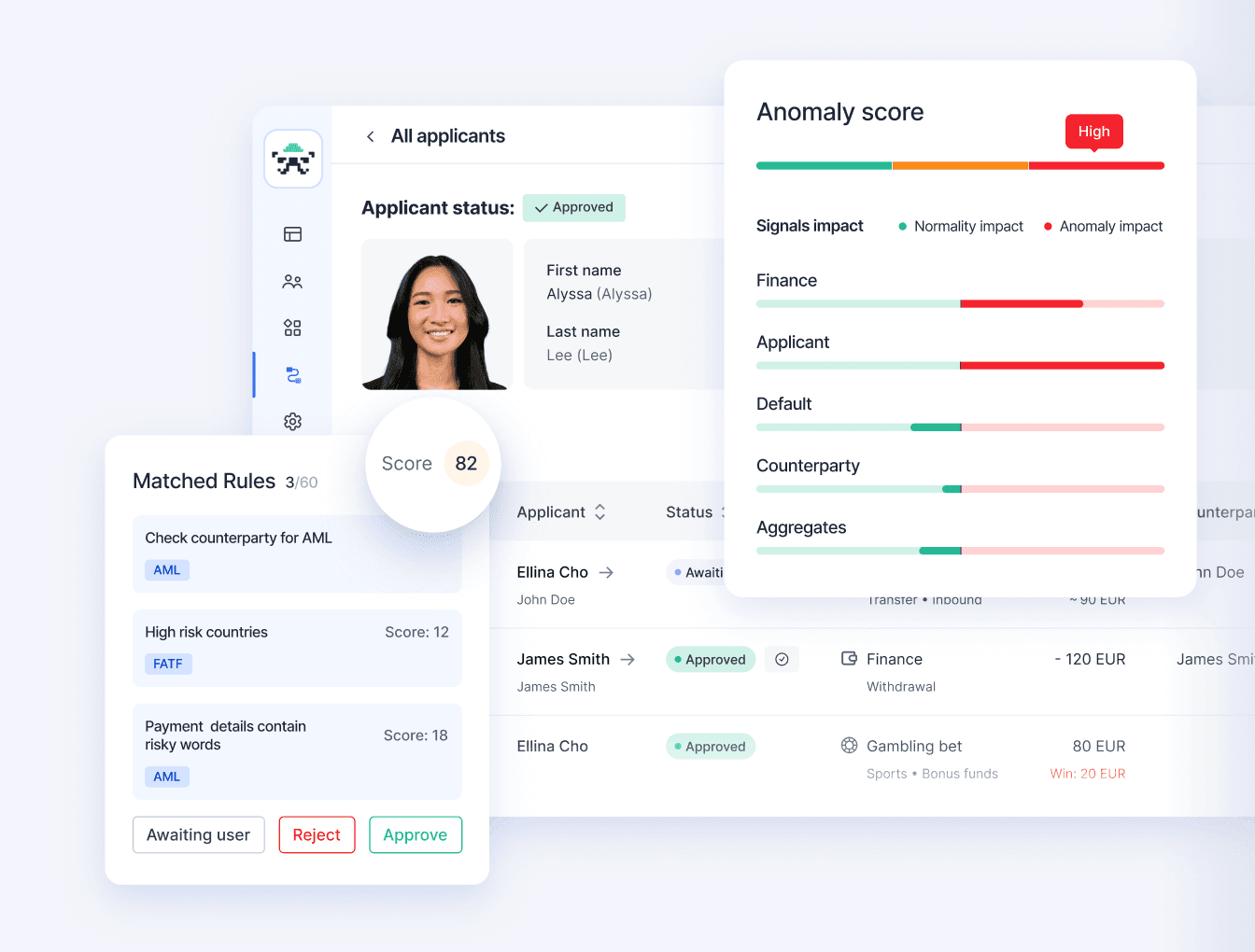
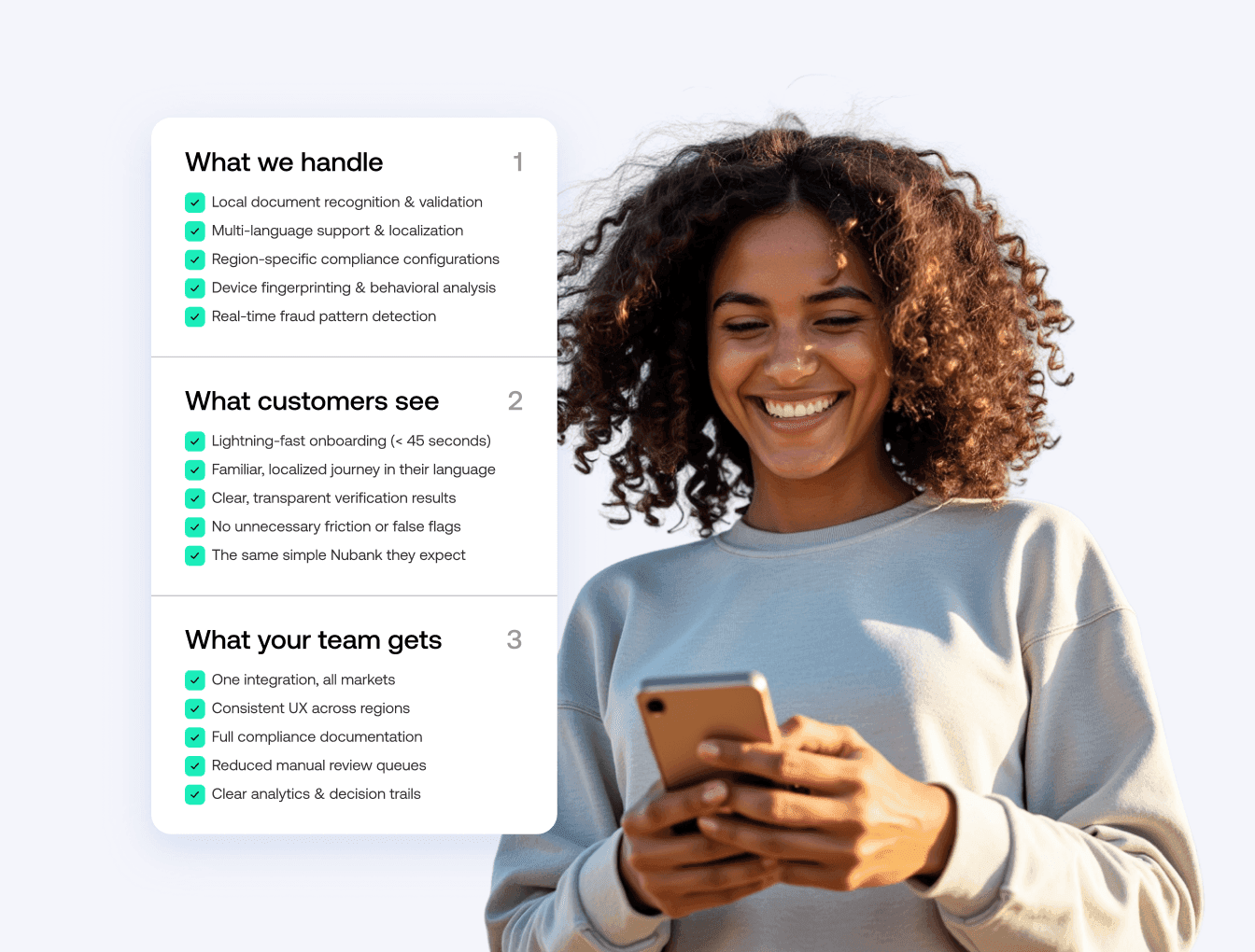
One platform for every tool you need
One unified platform to verify users, manage risk, and stay compliant. All with the speed, security, and simplicity that Neobanks deserve.
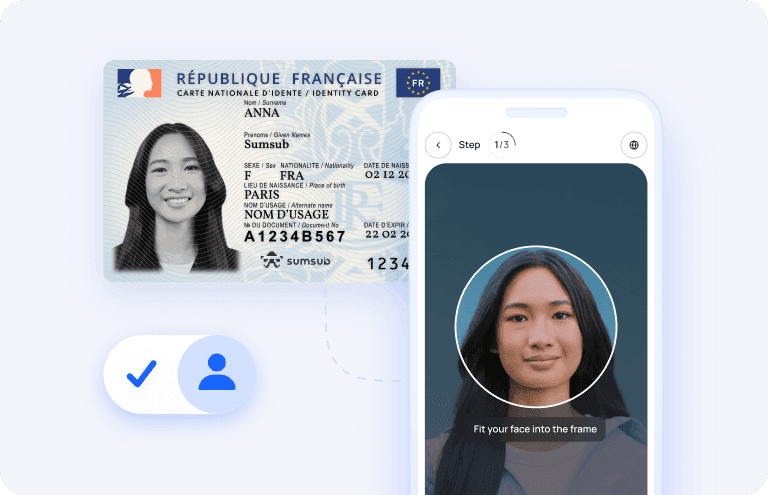
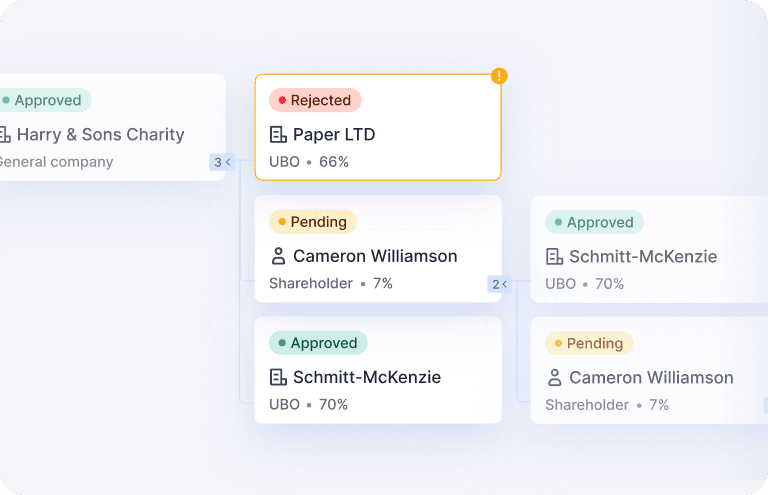
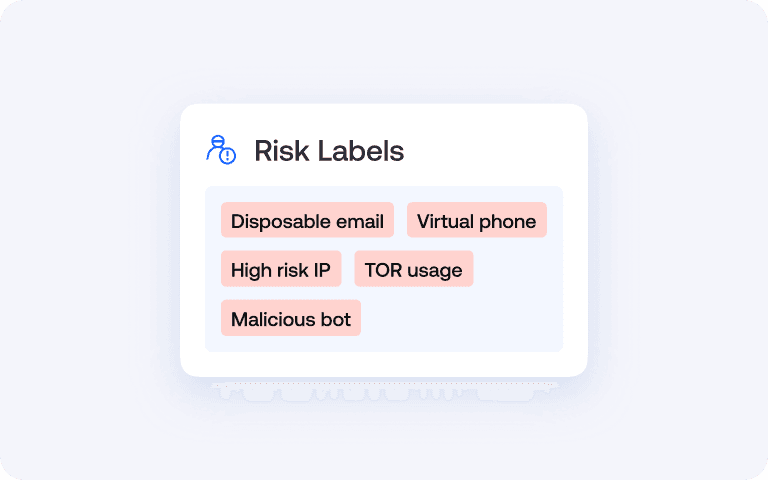
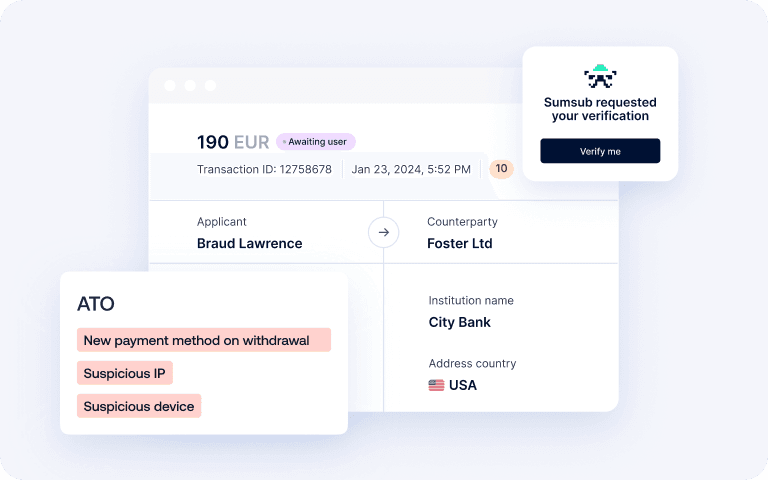
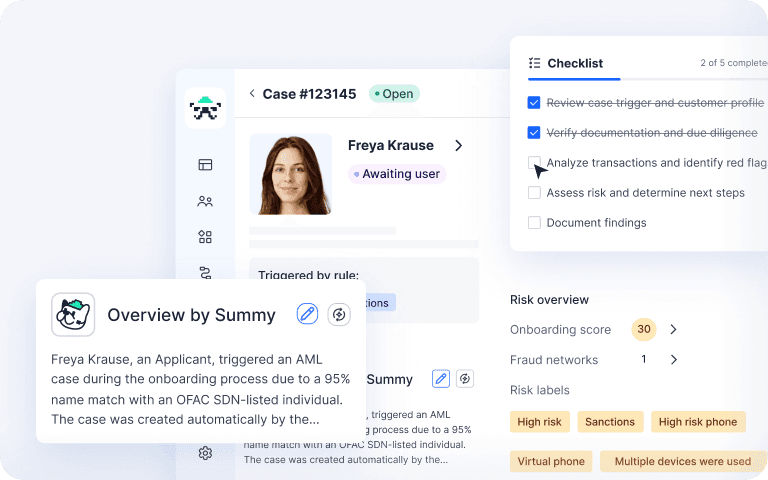

Local compliance, built for how banks operate
Regulatory expectations shift at every border. Sumsub adapts to the risk models banks actually face on the ground, from Brazil's Pix rules to the UK's AML requirements, the Philippines' AFASA, Mexico's SPEI, and Singapore's shared scam-liability framework, alongside AML/CFT reporting standards across every market you serve.
Build it once and every new region becomes a configuration, not a rebuild.
Don’t take our word for it.
Here’s what our clients have to say
- With Sumsub, the primary wins for us now include having KYB, KYC, and Transaction Monitoring all in one profile, which gives us a complete view of our customers. We also appreciate the ongoing screening of all counterparties and the ease of managing the compliance platform.
 Adam GristCPO at Xace
 - Sumsub has been a game-changer for The Kingdom Bank. Their identity verification platform has streamlined our customer onboarding process and significantly improved our compliance efforts. The range of verification methods, including document verification and facial recognition, ensures that we have a robust and secure system in place. The accuracy and speed of the verification process have been impressive, resulting in 48% revenue growth.
 Nebil Serkan ZubariFounder & CEO at The Kingdom Bank
 - Sumsub’s solution allowed us to significantly speed up our verification procedures, increase conversion rates, and lower costs. Sumsub fully integrates with our AML/KYC policies, providing a sophisticated and scalable solution that helps us stay compliant in new markets.
 Saaly TemirkanovExecutive Director at Jeton
Build trust at every stage of the banking journey
See how Sumsub can help your bank verify customers, stop fraud, monitor transactions, manage AML risk, and assess digital asset exposure across the full customer lifecycle.
What is digital customer onboarding in banking?
A customer verification process in banks involves undergoing their legal obligation to conduct KYC. Digital customer onboarding ensures customers can be integrated into the banking system remotely for a smooth experience without needing a physical bank branch. Banks must use client onboarding software that ensures they meet regulatory requirements and onboard only legitimate customers who aren’t conducting illicit financial activity.
How do digital banks verify identity?
Digital identity verification for banks can be a smooth and effortless process. By using biometric data, document verification, and government databases, digital banks can verify identity easily. Digital banks and neobanks conduct ID verification through photo uploads of government-issued IDs, such as driving licenses or passports, and verify the legitimacy and validity.
What is the KYC process for banks?
The digital KYC process for banks involves verifying customer identities and conducting due diligence on the individual, including financial activities and AML screening against watchlists or sanctions. Banks also need to assess the risk profile, verify their address, and conduct ongoing monitoring of their account to check for suspicious activity. A KYC tool for banks can conduct these necessary requirements to verify that the customer trying to onboard with their bank is legitimate and will not use the bank for money laundering or other illicit activity.
How bank KYC can be automated?
A KYC automation solution for banks integrates advanced technology, such as machine learning, artificial intelligence, and OCR data extraction. By combining this technology, banks can significantly reduce their manual workload, minimize errors, and improve efficiency. Likewise, the users looking to onboard with the banks receive a better user experience and can complete their onboarding quickly.
What is the best customer onboarding solution for banks?
The best digital onboarding solutions for banks ensure the utmost security and KYC/AML compliance standards while delivering efficient and accurate results using technology like AI and machine learning. Further features would include a user-friendly and customizable platform for compliance teams to easily view cases and address any risk alerts in a timely manner. The best solution would also make it simple for end-users to upload their documents, complete biometric verification, and get their results quickly for a smooth onboarding.
Can Sumsub support both fraud and AML teams?
Yes. Fraud and AML remain different disciplines, but they often rely on the same customer, transaction, device, network, and counterparty evidence. Sumsub helps teams connect this evidence so fraud, compliance, and operations teams can make decisions with shared context.
Can Sumsub help banks assess crypto or stablecoin exposure?
Yes, where relevant. Sumsub supports digital-asset risk controls such as crypto monitoring, wallet screening, Travel Rule support, unhosted wallet verification, KYB, AML transaction monitoring, and case management. This helps banks connect blockchain risk with verified customers, businesses, fiat activity, and transaction behavior.