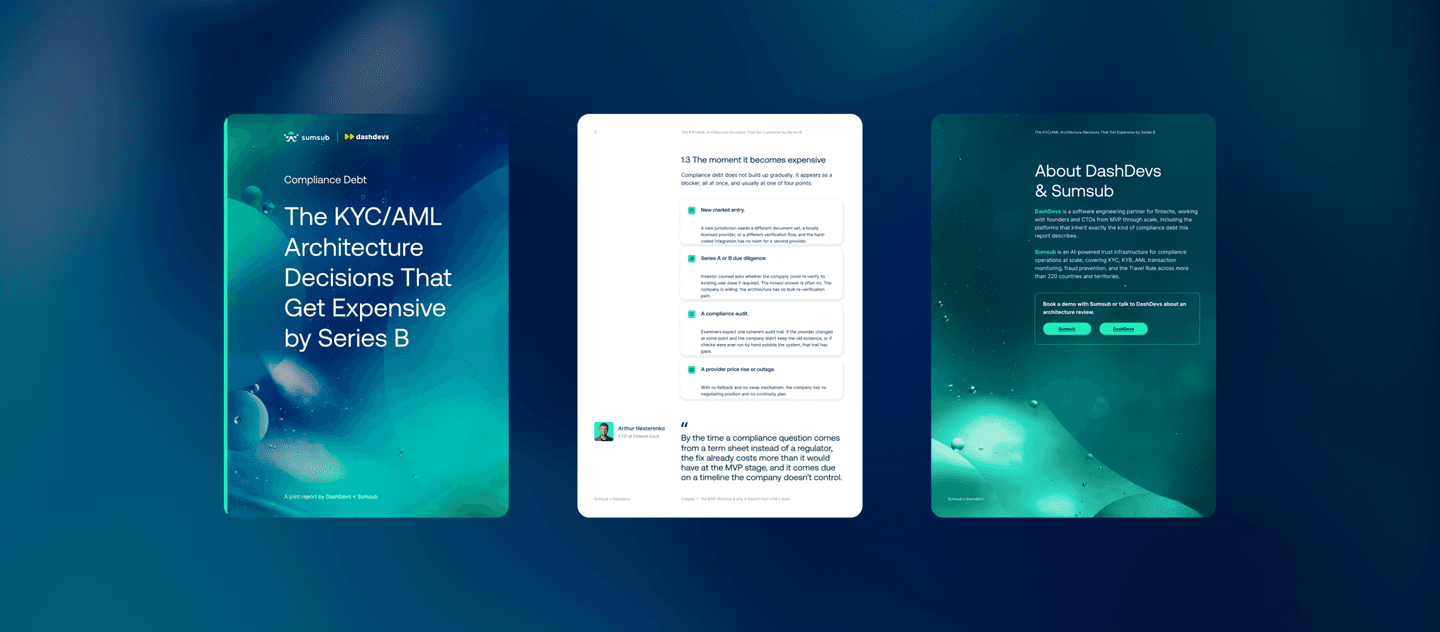
Most fintechs launch with one KYC provider wired straight into the onboarding service. No abstraction layer, no second provider, no clean way to re-run a check after a user passes onboarding.
At seed, that costs nothing. Then, the company enters a new regulated market, investor counsel asks due diligence questions, an audit starts, or the provider raises prices. Any one of these turns a two-week integration decision into a rebuild measured in months, on someone else's deadline. Together with DashDevs, we take a hard look at this problem and find solutions.
This report works through how to pay the debt down before it comes due, drawing on DashDevs' experience refactoring fintech platforms after launch and on Sumsub's work with platforms that switch providers, re-verify existing users, and move from one-off checks to continuous monitoring.
What you'll learn:
- Where compliance debt hides in a live codebase, from vendor IDs used as primary keys to webhook handlers written for one provider's payload
- What a provider-agnostic verification layer looks like: one internal interface, a provider-neutral data model, config-driven provider selection, and one webhook schema
- How to switch or add a KYC provider without re-onboarding your users, through data reuse, import, and targeted top-ups
- What regulators expect when you re-verify an existing user base, and why ongoing monitoring starts with your first customer
- How Kleos built compliance into its platform from day one, and what that did to verification completion and manual review
- The 10-point checklist that tells a founder or CTO whether their onboarding and compliance stack is Series-B-ready
This report is for: founders, CTOs, heads of engineering and product, and heads of compliance at seed to Series B fintechs, including neobanks, electronic money institutions (EMIs), wallets, payment service providers (PSPs), and crypto platforms, particularly teams preparing for a new market, a fundraise, or a provider change.