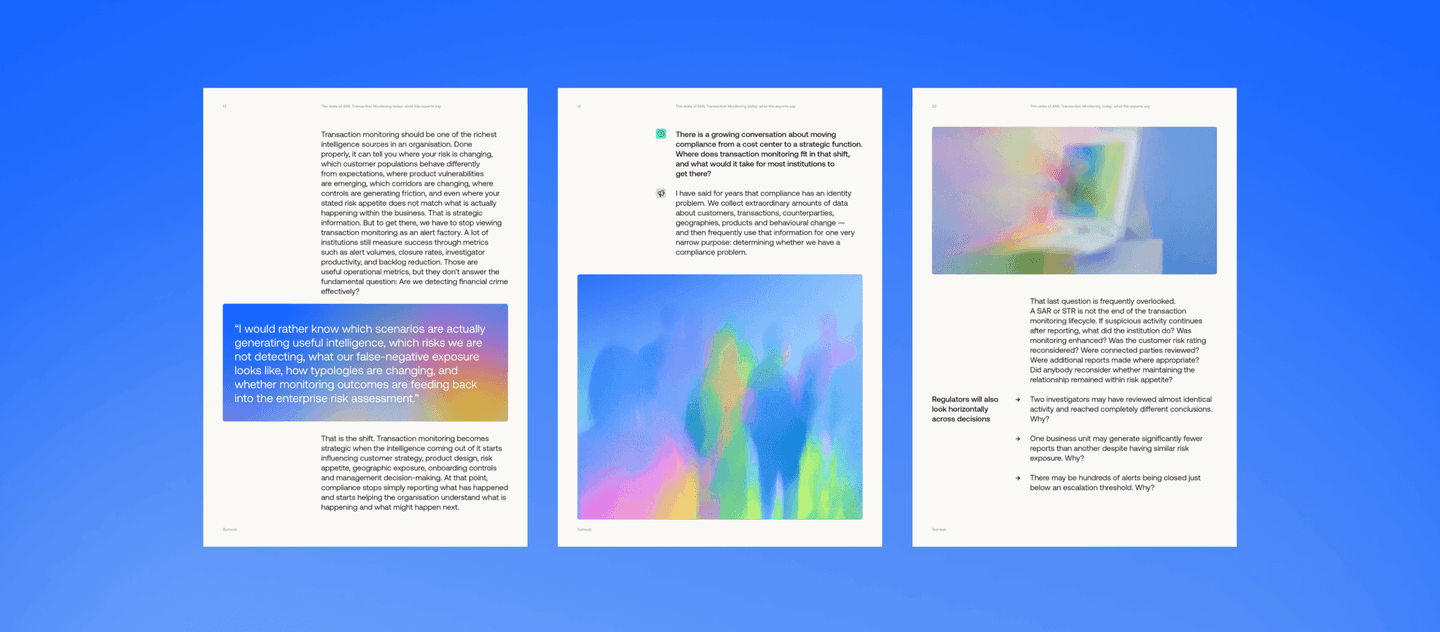
Regulators are no longer satisfied with a policy, a scenario inventory, and a record of closed alerts. They want proof that monitoring finds what matters, and the EU’s AMLR raises that bar further when it takes effect on July 10, 2027.
We asked three practitioners from our AML Transaction Monitoring 2.0 Academy course how strong programs meet it: Oonagh van den Berg, Founder and CEO of Virtual Risk Solutions and RAW Compliance AI; Danny Santo, Head of Compliance and MLRO at Mercuryo; and Natalie Buraimoh, Head of AML Product at Sumsub.
What you’ll learn
- What examiners trace when they follow a case from alert to decision to report, including the cases you didn’t file
- The AI risks teams underestimate, from automation bias to models trained on past poor decisions
- What makes a crypto STR useful to an FIU, and why defensive filing works against you
- How to keep one governance framework workable across multiple jurisdictions
Read their full answers in the expert guide, from the AI risks institutions still underestimate to the governance gaps that tend to surface first under examination.