Where automated attacks get through, and what security, fraud, and risk teams can do about it at both the request layer and the identity layer.
Malicious automation stopped looking like automation. Fingerprint measured 11% of desktop browser traffic running inside virtual machines last year, 6% arriving with developer tools open, and 4% showing signs of browser tampering, while VPN-flagged traffic climbed from 17% to 19% of identification events. Full-browser automation inside anti-detect browsers, residential proxy pools that route through real consumer connections, and LLM-driven behavior that mimics human typing and navigation all pass the controls built for headless scripts and known bad IPs.
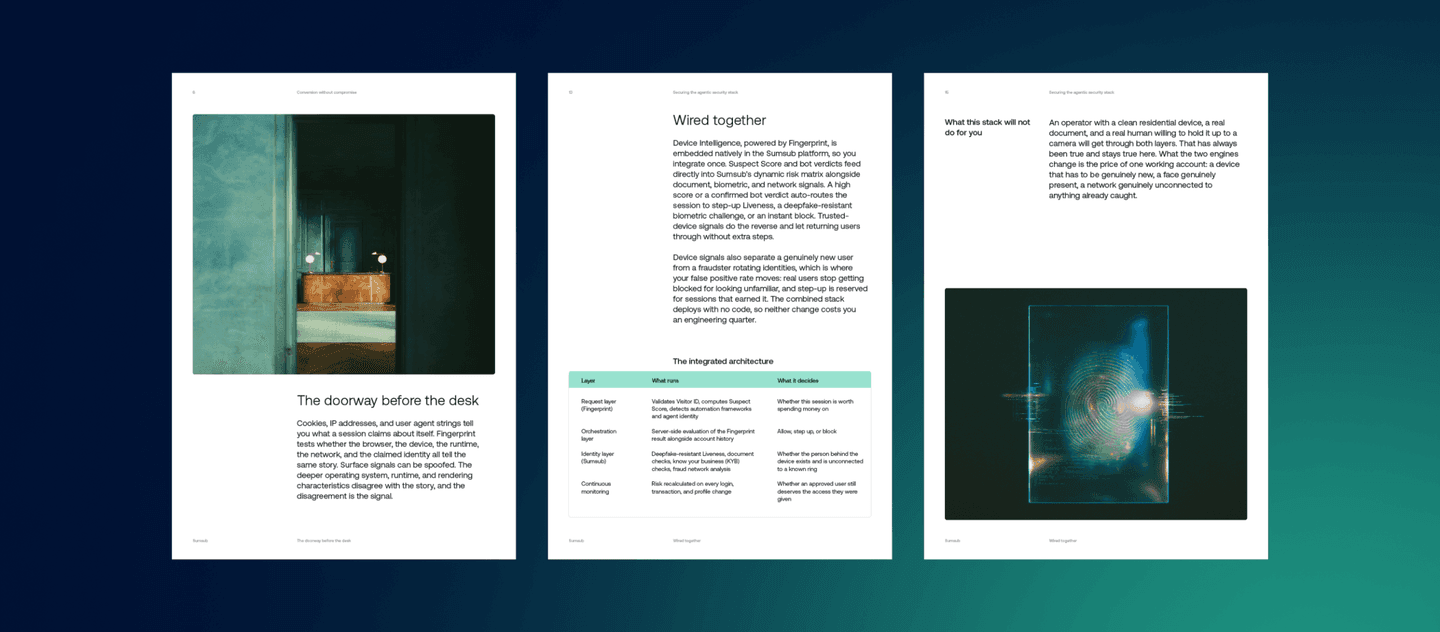
This report works through what closes that gap, drawing on Fingerprint's device intelligence and bot detection at the request layer and Sumsub's identity verification, biometric liveness, fraud network analysis, and continuous risk scoring behind it. Fingerprint's Suspect Score and bot verdicts already feed Sumsub's dynamic risk engine natively, with no code required, so what you read here is running in production today.
What you'll learn
- How current automated attacks evade WAFs, CAPTCHAs, and IP rate limits, from anti-detect browsers and canvas spoofing to residential proxies and virtual machines
- Why authorized AI agents and malicious ones arrive in the same shape, and how cryptographic agent identity separates them without blocking the products your customers asked for
- How Suspect Score turns individual device signals into one number you can write a rule against, and how to set your own thresholds
- Where to place the device decision so it happens before you pay for a KYC check, a liveness session, or an OTP
- What deepfake-resistant liveness, adaptive detection, and graph-based fraud network analysis catch once a session reaches your identity checks
- How the two layers hand off in production, including the exact signals worth passing between them and what each verdict should trigger
- A 10-point evaluation checklist for assessing your own resistance to automated attacks, synthetic identity creation, and browser spoofing
This report is for
Chief information security officers, heads of fraud and risk, chief risk officers, product security architects, threat intelligence leads, and the product owners who run sign-up and login flows at fintech, banking, e-commerce, and iGaming platforms operating across borders.