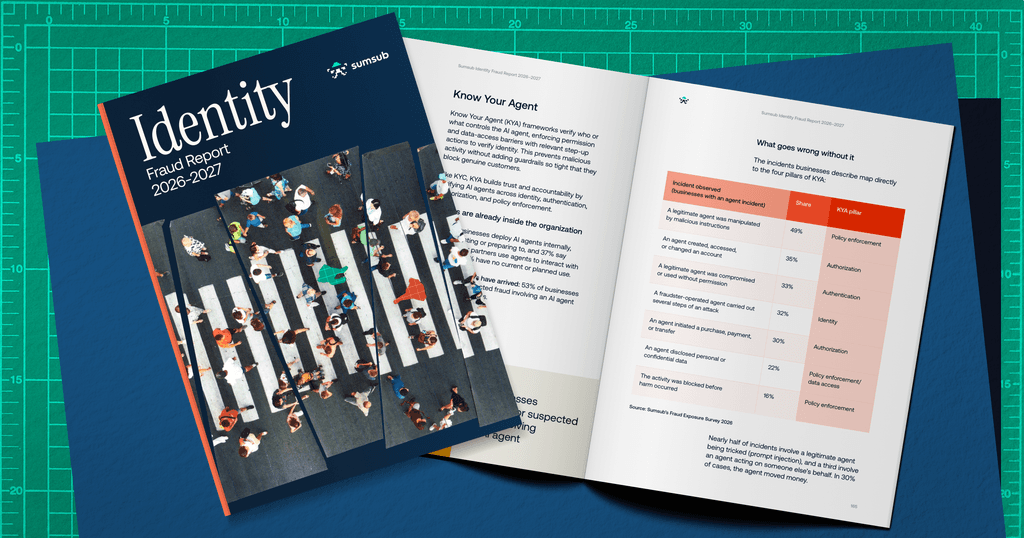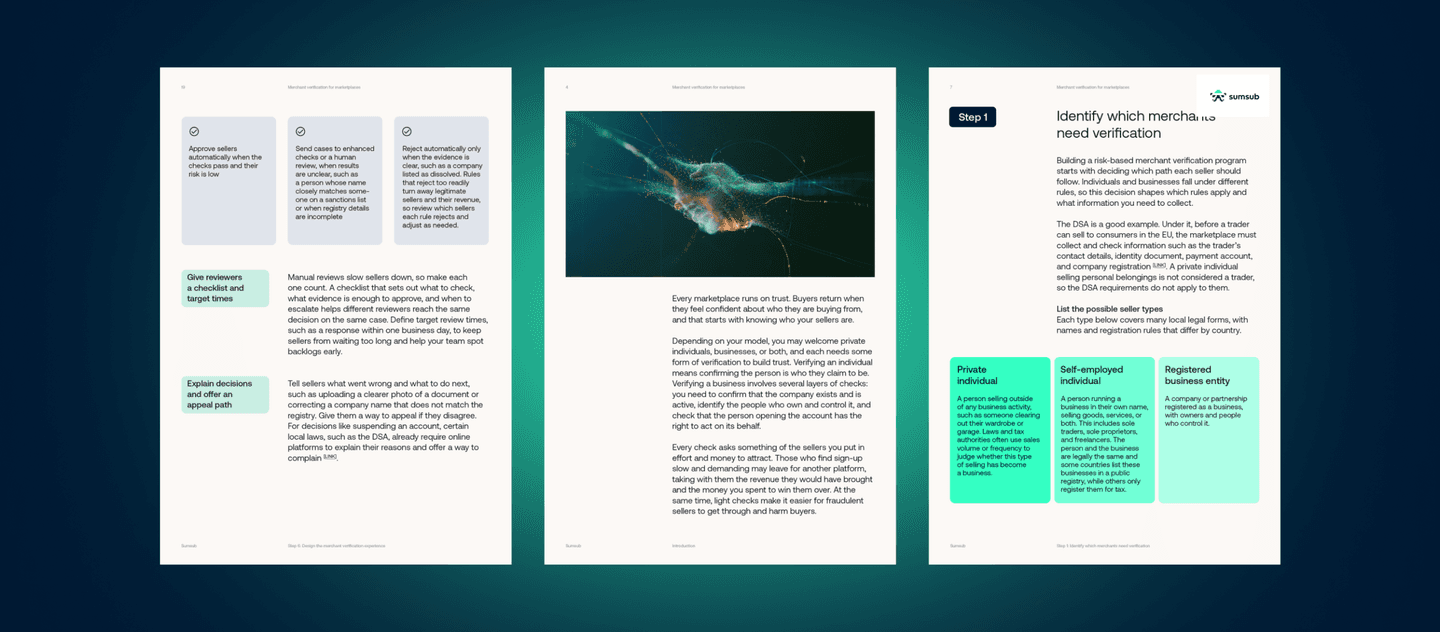
Learn how to match verification to each seller’s risk, focus rigorous checks only on the businesses that need them, and keep onboarding quick for the legitimate sellers.
Lawmakers increasingly expect marketplaces to know who is behind each seller account, and they are enforcing these rules with large fines. The DSA, DAC7, and the INFORM Consumers Act each ask for similar merchant information at different points in the journey. If you handle each law separately, you can end up asking the same questions several times, which gives legitimate sellers a reason to leave for another platform.
This playbook shows you how to design a risk-based business merchant verification program that meets these local obligations and keeps onboarding smooth for legitimate sellers.
What you’ll learn:
- Sort sellers into private individuals and businesses, and spot when a private seller has grown into a business
- Decide how closely to check each seller based on the risk signals they show
- Confirm that each business is real and that the people behind it have the right to act on its behalf
- Design an onboarding process that saves merchants’ time and asks for documents only when a seller’s risk calls for them
- Keep seller records accurate after onboarding and track how verification affects your revenue and risk