- Jun 19, 2026
- 5 min read
Building Trust as AI Agents Take Hold: Greater China Survey Results
AI agents are gaining ground in Greater China, but Sumsub’s new consumer survey suggests trust, verification, and fraud safeguards will determine whether adoption lasts.

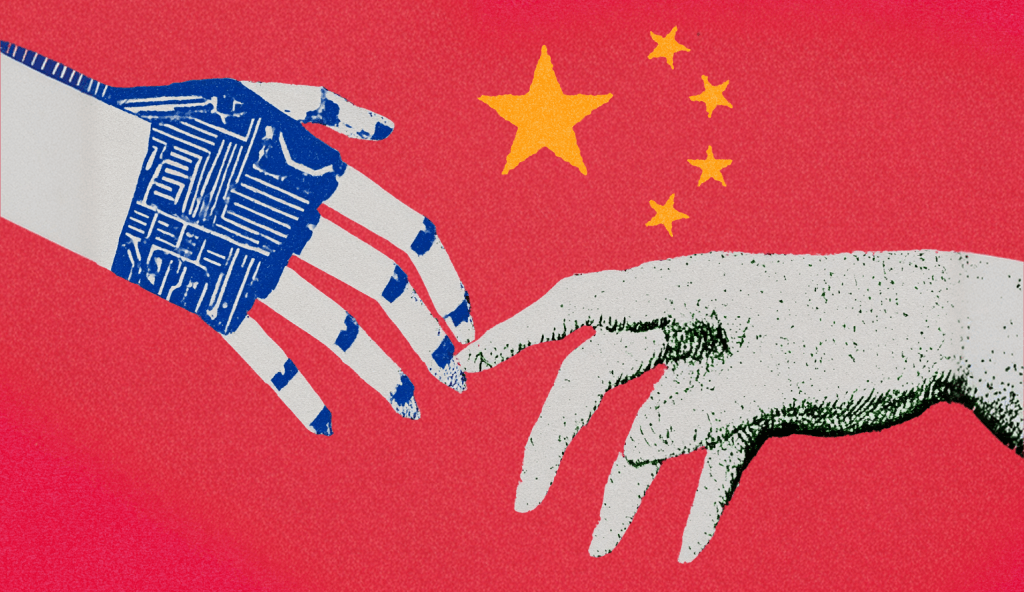
AI agents are rapidly entering everyday digital life in Greater China, but adoption may already be outpacing understanding, as Sumsub’s recent survey showed. Our data suggests that Mainland Chinese consumers are among the most willing to let AI agents act on their behalf. Yet, fewer than half of consumers in Mainland China and Hong Kong can reliably identify an AI agent when shown one, and nearly half across Greater China say they have already experienced at least one negative outcome linked to AI agent use.
While AI agents may offer convenience and smoother customer journeys, there are challenges ahead if this adoption is to last.
Why Greater China is a test case for AI agent trust
AI agents have moved quickly from technical curiosity to consumer products. Early projects such as Manus helped popularize the idea of autonomous assistants that complete tasks on a user’s behalf. Now, the same concept is moving into the platforms where hundreds of millions of people already message, shop, search, and work.
This shift is especially visible in Mainland China, where consumers are already accustomed to performing many everyday tasks within integrated digital platforms, potentially making the leap to using an AI agent feel smaller.
Tencent’s reported work on an AI agent for WeChat is a good example of this development. WeChat, China’s most-used super app, has over 1.4 billion users and is deeply embedded in daily digital life. According to the Financial Times, Tencent is testing an AI agent inside WeChat that could help users complete tasks by interacting with the app’s vast network of mini-programs as companies race to make AI assistants more useful.
At the same time, Chinese authorities have issued guidelines for AI agents, stressing safety, controllability, standardization, and application-driven development.
Hong Kong’s privacy regulator has also recently warned that agentic AI poses higher risks than ordinary chatbots because it can be given high-level access to files, emails, account credentials, external services, and multi-step workflows.
These developments make Greater China a useful test case for the next stage of consumer AI. AI agents are becoming more capable and more closely tied to everyday digital services. But they are also arriving at a time when digital fraud is a major concern. Sumsub’s Identity Fraud Report 2025–2026 warns that fraud is shifting toward more complex schemes, with agentic AI scams poised to rise in 2026.
That gives consumers good reason to be wary, with the question moving from whether people want to use AI agents to whether they understand when an agent is acting, what it is allowed to do, and who is responsible if something goes wrong. A recent Sumsub survey suggests that adoption may already be outpacing understanding in Mainland China and beyond.
Adoption is running ahead of understanding
The Sumsub Greater China AI Agents Consumer Trust Survey, conducted among 1,050 respondents by the independent market research house Blackbox, points to a new and challenging landscape, where consumers are beginning to delegate real tasks to AI agents, despite many being unable to recognize an agent or understand the risks involved.
 Jonathan Smetherham
CIO at Blackbox
Jonathan Smetherham
CIO at Blackbox
Fewer than half of the respondents could correctly identify an AI agent when shown one. The data we got shows that the AI agent label is ahead of public understanding. Some people may be mistaking ordinary AI assistants for agents; more concerningly, others may be using agentic tools without knowing what they are, what they can do, or when control has been handed over. That matters a lot because delegation without recognition is like putting something on autopilot without knowing who set the route. As AI agents move from novelty to background helper, people need three things: clearer signals, simpler explanations, and better guardrails.
This is especially visible in Mainland China, where 37% of consumers say they have already allowed AI to take real-world actions on their behalf. In Hong Kong, the figure is much lower, at 15%. This suggests that Mainland China consumers are moving faster from using AI as an assistive tool to treating it as an active digital intermediary that can help complete tasks.
However, understanding does not seem to have kept pace with the scale of adoption. Only 42% of consumers in Mainland China and 45% in Hong Kong could correctly identify an AI agent when shown real-world examples. This could make it harder for users to understand when they are accepting risks.
This gap between use and understanding may already be causing real-world harm. Across Greater China, 44% of consumers reported at least one negative outcome associated with AI agent use. These outcomes included unintended actions, unauthorized purchases, personal data leaks, fraud, and account compromise.
This helps explain why consumers remain cautious even as adoption grows. In Mainland China, 73% of consumers say they want to review and approve AI actions before they happen. In Hong Kong, this rises to 78%. Consumers may be open to the convenience of AI agents, but they still want to keep their hand on the controls, especially when actions involve money, personal data, or account access.
The same concern is reflected in demand for clearer trust signals. In Mainland China, 82% of consumers say a verified AI agent label would make them more comfortable using one. In Hong Kong, 74% say the same. This suggests that adoption will depend not just on how capable AI agents are, but on whether users can understand and verify them.
The trust challenge of agentic AI
The survey indicates that while people are open to the benefits of agentic AI, adoption will be shaped by how protected they feel when they allow AI to act on their behalf.
More advanced agents may be able to complete more tasks and make more decisions, but that may not be enough if consumers do not understand when an agent is acting, what it is allowed to do, or, importantly, who is accountable.
Higher adoption levels in Mainland China create more opportunities but also increase risk exposure, especially as regulators take note of agentic AI. Convenience may drive first use, but trust will determine whether consumers keep using these tools for higher-risk activities.
Similarly, in Hong Kong, the findings suggest that while consumers are more cautious about delegation, trust signals could play a major role in encouraging adoption.
Consumers in both markets want to review AI actions before they happen, suggesting that autonomy should be matched to risk. This is crucial because agentic AI is emerging in an environment where consumers and businesses are already dealing with high levels of digital fraud.
An AI agent might summarize information or compare options with minimal friction, but when it comes to payments, purchases, account changes, data sharing, or other consequential actions, users expect a checkpoint.
As AI agents begin interacting with platforms on behalf of users, businesses will need ways to distinguish legitimate, authorized agents from suspicious automation. Consumers will also need simple, recognizable signals that show whether an agent is verified, what permissions it has, and whether its actions can be traced back to an accountable person or organization.
This is particularly relevant for sectors where fraud, identity misuse, and account compromise are already major concerns. AI agents could improve customer experience, but they could also create new routes for abuse if they are not properly governed.
From AI adoption to AI agent trust
Across Greater China, consumers are showing openness to AI agents that can act on their behalf, especially when the right safeguards are in place. This is a sign that people want the convenience of AI agents, but they also need a way to trust them.
The issue of trust is essential because AI agents are developing during an unprecedented fraud crisis. Agentic AI could help make digital services smoother, but without clear verification and accountability, it could also give bad actors new ways to exploit permissions and automate abuse.
As AI agents become more capable, businesses will need to distinguish between legitimate automation acting on behalf of a real user and suspicious or malicious automation. Blocking all agent-driven activity is simply impractical, but allowing unknown agents to act without oversight creates clear risks.
Know Your Agent, or KYA, offers a framework for addressing this challenge. Similar to how Know Your Customer processes help businesses establish trust in human users, KYA is designed to verify AI agents. This risk-based approach can define an agent’s identity, bind it to a responsible human or organization, and enforce oversight.
Verification alone, however, will not be enough to tackle the emerging trust issues in an agentic AI environment. Businesses also have a responsibility to help customers understand what AI agents are and how they work, with user education essential if consumers are expected to delegate meaningful tasks safely.
As AI agents move deeper into everyday platforms, trust will be the key factor in lasting adoption. Verification will be an important part of that trust and, in an increasingly agentic AI world, will help maintain human accountability.
Relevant articles
- Article
- 1 week ago
- 10 min read
How AI agents automate payables, receivables, FP&A, and the financial close – with governance, ROI benchmarks, and a rollout roadmap.

- Article
- Sep 25, 2026
- 11 min read
Ponzi scheme vs. pyramid scheme: compare how each works, real cases, legal risks, and how AI compliance agents help detect and prevent both scams.



What is Sumsub anyway?
Not everyone loves compliance—but we do. Sumsub helps businesses verify users, prevent fraud, and meet regulatory requirements anywhere in the world, without compromises. From neobanks to mobility apps, we make sure honest users get in, and bad actors stay out.
