- Jun 15, 2026
- 9 min read
Election Fraud Worldwide: How AI Is Eroding Trust in Elections (2026)
Discover what election fraud is, its main types, real-world examples, and the penalties fraudsters could face.

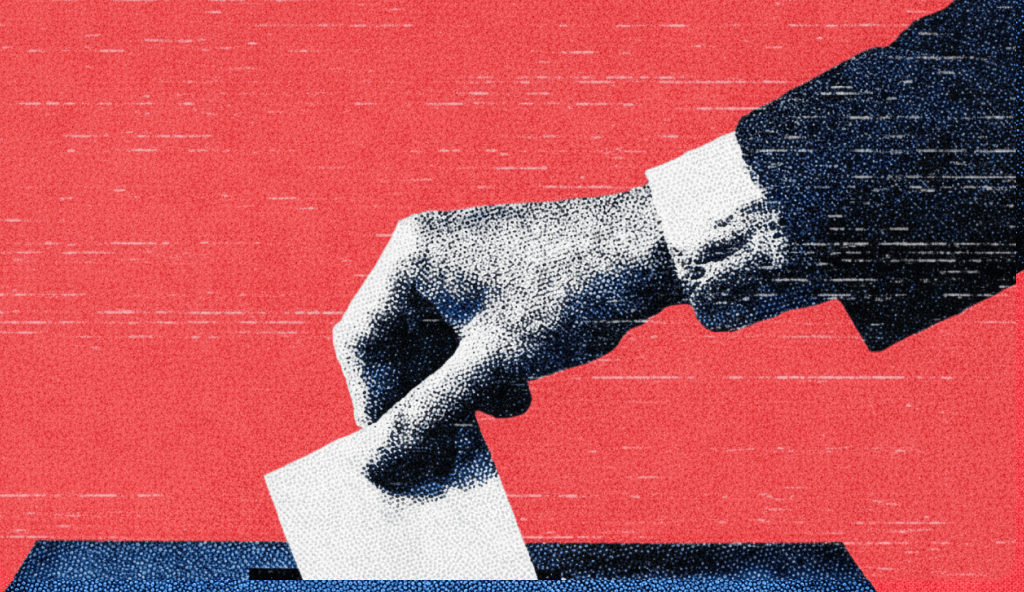
Fair elections depend on trust that voters know when and where to vote, trust that candidates are who they claim to be, trust that information is real, and trust that results reflect the will of the public.
This trust, however, has been eroded in an ongoing AI-driven fraud crisis, making parts of the electoral process increasingly vulnerable to certain types of fraud.
In January 2024, thousands of voters in New Hampshire received a robocall that sounded like President Joe Biden telling them not to vote in the state’s Democratic primary. This was actually an AI-generated voice clone. The political consultant behind the call faced a finalized $6 million FCC penalty for caller‑ID spoofing and was separately charged in New Hampshire with voter suppression and candidate impersonation; he was acquitted of those criminal charges by a jury in 2025.
Since then, electoral fraud has only become more advanced in its potential scale and sophistication. AI-generated deepfakes, synthetic voices, and coordinated disinformation campaigns can now influence public opinion at a national scale, blurring the line between reality and fabrication.
In 2024, Sumsub detected a 245% year-on-year increase in deepfakes worldwide, including growth in several countries holding elections that year. More recently, our 2025–2026 Identity Fraud Report has found a 180% rise in sophisticated fraud, meaning multi-step attacks that combine techniques such as synthetic identities, social engineering, device tampering, and cross-channel manipulation, showing how quickly fraudsters are adopting AI that can be used to undermine trust.
In this guide, we explain what election fraud is, the main types of election fraud, shocking real-world global examples from recent elections, the penalties fraudsters face, evolving regulations as governments tackle the crisis, and how AI-powered fraud detection can help protect the democratic process in 2026.
What is election fraud?
Election fraud is any act that illegally manipulates or disrupts part of an election. It can occur before, during, or after voting, and it may target voters, candidates, campaign materials, polling procedures, or the public's trust in the outcome.
At its core, election fraud is about undermining the integrity of the electoral process.
Traditional forms of electoral fraud include voting more than once (i.e., double voting), ballot stuffing (insertion of illegitimate ballots, usually by insiders), vote buying, intimidation, forged registrations, tampering with voting machines, falsifying vote counts, or misusing postal ballots. However, election fraud is rapidly changing as trust breaks down. Today, fraud may also involve deepfake videos, cloned voices, and sophisticated disinformation campaigns designed to stop people from voting or make them doubt legitimate results.
Voter fraud vs election fraud
Voter fraud focuses on unlawful voting activity by voters, while election fraud covers broader attempts to interfere with an election.
Electoral fraud may encompass a wide range of scenarios and actors, including voters, candidates, campaign staff, political groups, election officials, technology providers, online platforms, and external actors. For example, a campaign team that uses AI-generated deepfakes to spread false information about an opponent to influence voter behavior could be engaging in electoral fraud or election interference.
Voter fraud, meanwhile, is a narrower category and refers to illegal actions committed by individual voters or groups of voters. Examples include voting more than once or voting under another person’s name.
To sum up:
❗ Electoral fraud is an umbrella term (it can be committed by many different actors and affect many stages of the election process).
Voter fraud is one specific type of electoral fraud committed by voters themselves.
Suggested read: Expert Corner: From Deepfakes to Democracy—The Battle Against AI-Generated Misinformation and Fraud
With this distinction in mind, let’s look at the other main types of election fraud and how they can affect the integrity of the electoral process.
Main election fraud types
There are multiple types of election fraud. The exact legal definitions vary by country, but the types of electoral fraud below are among the most common.
Illegal discarding of registration cards
Fraud can occur when someone deliberately destroys, alters, hides, or fails to submit voter registration forms, such as an application for a voter registration card that allows an eligible person to vote.
This type of fraud can prevent people from voting before election day arrives. It may also be hard for voters to detect until they try to cast a ballot and discover that their registration was never processed.
Vote buying by campaigns and parties
Vote buying is a well-established category of election fraud in which a campaign, party, candidate, or supporter offers money, gifts, jobs, food, services, or other benefits in exchange for a person’s vote. It may include rewards for not voting, voting for a particular candidate, or persuading others to vote in a specific way.
Vote buying has been an issue for an extremely long time. In 181 BCE, the Roman Republic passed a law against electoral bribery, suggesting that candidates buying off voters had become a serious enough problem to warrant severe punishment.
More than two millennia later, vote buying continues to undermine elections around the world. In the UK, an election court voided the 2014 Tower Hamlets mayoral election in 2015 after finding Lutfur Rahman guilty of corrupt and illegal practices, including bribery of voters. Rahman was ordered to pay £250,000 (approximately $335,000) in costs.
Forgery on ballot petitions
In many electoral systems, candidates must collect valid signatures before they can appear on the ballot. Fraud can easily occur when campaign workers forge signatures, misrepresent the purpose of a petition, or submit signatures from people who are dead, ineligible, or unaware that their names were used.
In a recent example of this type of election fraud, reporters in 2025 found more than 50 apparently fraudulent signatures, including some attributed to deceased people, on a petition submitted for Mayor Eric Adams' independent re‑election bid.
Ballot harvesting of mail-in ballots
Ballot harvesting means collecting completed absentee or mail-in ballots from voters and delivering them on their behalf. In some places, like California, limited ballot collection is allowed. In other places, such as Alabama, it is not.
There is a risk of fraud when ballot collection is coercive, deceptive, or used to tamper with votes. For example, a collector might pressure voters, collect incomplete ballots, alter choices, fail to return ballots, or target voters likely to support an opposing candidate.
Robocall and misinformation campaigns
Modern misinformation campaigns can target voters at scale through robocalls, text messages, fake websites, social media posts, AI-generated images, or deepfake audio and video. These campaigns may give voters false information about candidates, as well as details such as polling dates, eligibility, ballot rules, or the legitimacy of the results.
If fraudsters can confuse voters, suppress turnout, impersonate trusted officials, or spread false claims about the process, they can undermine election integrity.
In Slovakia’s 2023 parliamentary election, for example, an AI-generated audio recording circulated shortly before voting, allegedly featuring Progressive Slovakia leader Michal Šimečka and journalist Monika Tódová discussing how to rig the election. The recording appeared during a sensitive pre-election period, making it harder to debunk quickly.
The use of AI in misinformation has only become more widespread since, with Colombia’s 2026 presidential campaign showing how AI-generated content became central to the election environment. El País reported that AI-generated videos were flooding the campaign, while one audio clip allegedly suggested a plot involving Senate president Efraín Cepeda and the national registrar to commit fraud before legislative elections. Even if this kind of content does not necessarily change votes, it can still damage trust in institutions and fuel illegitimate narratives of fraud.
Illegal activity in vote counting
Illegal activity in vote counting includes changing vote totals, adding fake votes, removing valid votes, misreporting results, or any other interference with the counting process. It can range from long-standing problems like ballot stuffing, where fraudulent ballots are added to a candidate’s vote total, to more modern concerns like voting machine fraud.
Violations of campaign finance laws
Campaign finance rules are designed to stop candidates, parties, or anyone else from illegally influencing elections. Election finance violations can include making illegal donations, straw-donor schemes, undisclosed spending, false reporting, misuse of campaign funds, or attempts to hide who paid for political activity.
Serious violations may even undermine the integrity of the electoral process by hiding who is funding political activity, circumventing spending limits, or misleading voters and regulators.
Suggested read: Deepfake Cases Surge in Countries Holding 2024 Elections, Sumsub Research Shows
Deepfakes and AI threats to elections
Deepfakes and AI-generated content have become one of the most serious concerns in election fraud and security. Unlike traditional fraud, which often targets ballots, voter rolls, or vote counts, AI-enabled fraud can target the information environment around an election. A convincing fake video, cloned voice, or AI-generated news story can mislead voters before they ever reach a polling station.
While some AI-generated content may be satire or genuine campaign material, there is a serious risk that synthetic media will be used to impersonate candidates, spread false voting information, or fabricate “evidence” that the electoral process has been compromised.
Election deepfakes: 2024 vs 2025
In 2024, experts expressed concern about the potential hazards posed by deepfakes in election fraud. While there is limited evidence that AI-generated content decisively changed major election results, several high-profile incidents demonstrated its ability to influence the information environment surrounding democratic processes.
In Romania, the first round of the 2024 presidential election was annulled after authorities raised concerns about AI-manipulated videos targeting voters, suspected foreign interference, and significant irregularities. It has become a stark warning of the vulnerability of elections in the modern technological ecosystem.
In India, fake videos appeared to show Bollywood actors Aamir Khan and Ranveer Singh criticizing Prime Minister Narendra Modi and supporting the opposition Congress party, showing how AI could be used to fake endorsements from trusted public figures.
Throughout 2025, the risks of election fraud changed. The problem was no longer just viral fake videos but industrial-scale AI-enabled manipulation, often targeting the voting process itself.
In Ireland’s presidential election, for example, a deepfake video falsely showed candidate Catherine Connolly withdrawing from the race and claiming that the election had been canceled, potentially disenfranchising voters.
Deepfakes not only target candidates' reputations but also voters’ understanding of whether an election is even taking place.
AI fraud potential in elections in 2026
Public awareness of political deepfakes is growing. While that may make obvious fakes less convincing, it also creates a new problem: people may dismiss genuine recordings, real scandals, or authentic evidence as AI-generated.
Trust is key because it affects participation in the electoral process. Research across 31 elections found that confidence in the process was associated with a nearly 5% higher probability of voting. If voters believe elections are unfair, then participation falls.
Several countries—including the United States, Brazil, Sweden, Spain, France, Haiti, Argentina, New Zealand, Israel, and Nigeria—are scheduled to hold national or regional elections in 2026 and 2027, which makes them potential targets for AI-enabled election fraud.
Before election day, it can be used to fake endorsements or fabricate scandals at a far greater level of convincing sophistication and scale than possible in 2024. During voting, it can help spread false information about polling places, eligibility, or ID requirements. After voting, it can generate fake “evidence” of fraud to undermine trust in the result.
Protecting elections means protecting both the voting process and the information environment around it.
Suggested read: Deepfake Targeting Irish Presidential Candidate Sparks Election Integrity Fears
How regulations address election fraud
The penalty for election fraud depends on the country and the nature of the offense.
In the US, federal election offenses carry serious criminal penalties. For voter fraud, for example, under 52 U.S. Code § 20511, a penalty for knowingly and willfully submitting fraudulent voter registration applications can lead to a fine, up to five years in prison, or both.
Other jurisdictions are also adapting their rules to AI-driven election risks. The EU’s AI Act, for example, introduces transparency obligations regarding the use of AI-generated content, such as deepfakes. In South Korea, meanwhile, election law restricts AI-generated deepfake campaign content in the three months before election day, with violations potentially leading to a sentence of up to 7 years in jail.
In serious cases, courts or election bodies may even void an election, order a new vote, disqualify a candidate, remove an elected official, or impose civil penalties on campaigns, parties, consultants, or donors.
However, AI is also rapidly changing the nature of fraud, and elections are particularly vulnerable. Penalties to combat this urgent threat are still developing. A misleading deepfake video, a voice-clone robocall, or any other AI-generated attempt at voter suppression may be prosecuted under existing laws on voter intimidation, impersonation, telecommunications fraud, misinformation, campaign rules, or election interference, depending on the jurisdiction.
Suggested read: How to Stay Ahead of Deepfake Evolution in 2026
Election fraud prevention in 2026
Preventing election fraud and maintaining electoral trust in 2026 requires significant work. Election authorities, platforms, campaigns, and technology providers increasingly need layered controls to help protect voter enfranchisement and ensure electoral integrity.
There are several ways of making fraud harder to attempt, easier to detect, and less damaging to society. Failure to do so could have grave consequences for the electoral process and the trust the public has in the results.
Voter identity verification
Voter identity verification helps confirm that a person is eligible to vote and that each eligible voter can cast only the number of votes permitted by law. Depending on the country, this may involve checking a voter’s name against a register or verifying a national ID document.
Good identity verification balances the two priorities of election integrity and voter access. Weak checks can create opportunities for impersonation, duplicate voting, or fraudulent registrations. Overly burdensome checks can disenfranchise eligible voters.
Deepfake and synthetic media detection
Deepfakes now account for 11% of global fraudulent activity, making detection key to preventing misinformation and disenfranchisement. AI-generated content can impersonate candidates, election officials, journalists, campaign staff, or public institutions. It can also create fake “evidence” of fraud to mislead the public.
Election authorities, governments, social media platforms, and technology providers all have a role to play in protecting trust in the electoral process. Effective controls include:
- Monitoring public channels for candidate and election-official impersonation
- Using deepfake detection tools for suspicious audio, video, and images
- Applying content provenance, watermarking, or cryptographic verification where possible
- Flagging misleading electoral-process content to platforms
- Public awareness campaigns of deepfake risks
Remote and online voting authentication
Remote and online voting can improve access for voters, but it also introduces potential security risks. These include account takeover, malware, phishing, coerced voting, identity misuse, fake voting portals, credential theft, and attacks on the systems that transmit, store, or count votes, with potentially colossal consequences for society.
Therefore, remote voting systems require strong authentication controls. A voter may need to prove eligibility, access the correct ballot, submit a vote securely, and remain protected from vote manipulation, all while preserving ballot secrecy.
Fraud prevention could also include account-level monitoring. Unusual login patterns, repeated failed attempts, high-risk devices, suspicious IP behavior, or attempts to access many voter accounts from the same infrastructure can all indicate organized abuse networks.
Insider threat and process integrity controls
Any person with access to voter registration data, ballot storage, or counting rooms may be able to alter records, leak information, delay processes, or help external actors.
Process integrity controls are designed to reduce that risk. They make sure no single person can secretly manipulate an election process without detection.
Examples include:
- Segregation of duties
- Secure storage for ballots and voting equipment
- Access controls for voter registration systems
- Background checks where legally appropriate
- Independent observers and recount procedures

Election fraud FAQ
-
Is election fraud a real risk, or is it overstated?
Election fraud risk is a real risk. While proven large-scale ballot fraud is relatively rare in established electoral systems, smaller-scale fraud, voter suppression, illegal campaign activity, and AI-driven misinformation are causing serious harm.
-
How can deepfakes be used to manipulate elections?
Deepfakes can support election manipulation by impersonating candidates, election officials, journalists, or trusted public figures in fake audio, video, images, or robocalls. They can spread false voting instructions, fake scandals, and fabricated endorsements at moments when voters and officials have little time to verify them.
-
What technologies are used to prevent election fraud?
Election fraud prevention technologies include voter registration database checks, identity verification, multi-factor authentication for online services, ballot tracking, audit logs, anomaly detection, and deepfake or synthetic media detection. These tools work best when combined with transparent procedures, secure ballot handling, independent observation, and efficient public communication.
-
What is the voter fraud penalty?
Penalties vary around the world. The federal voter fraud penalty in the US, for instance, depends on the nature of the offense, but federal election crimes can lead to fines, imprisonment, or both. For example, voting more than once in a federal election can carry a fine and up to five years in prison under US federal law.
Relevant articles
- Article
- 5 days ago
- < 1 min read
Can you spot a deepfake? Challenge yourself with For Fakes’ Sake, the interactive game, and see if you can identify all the deepfakes!


- Article
- 1 week ago
- 25 min read
Can anyone be scammed? Fraud experts say yes, here’s why.







What is Sumsub anyway?
Not everyone loves compliance—but we do. Sumsub helps businesses verify users, prevent fraud, and meet regulatory requirements anywhere in the world, without compromises. From neobanks to mobility apps, we make sure honest users get in, and bad actors stay out.
