The execution gap in fraud and compliance
European financial institutions are no longer debating what needs to change. They know.
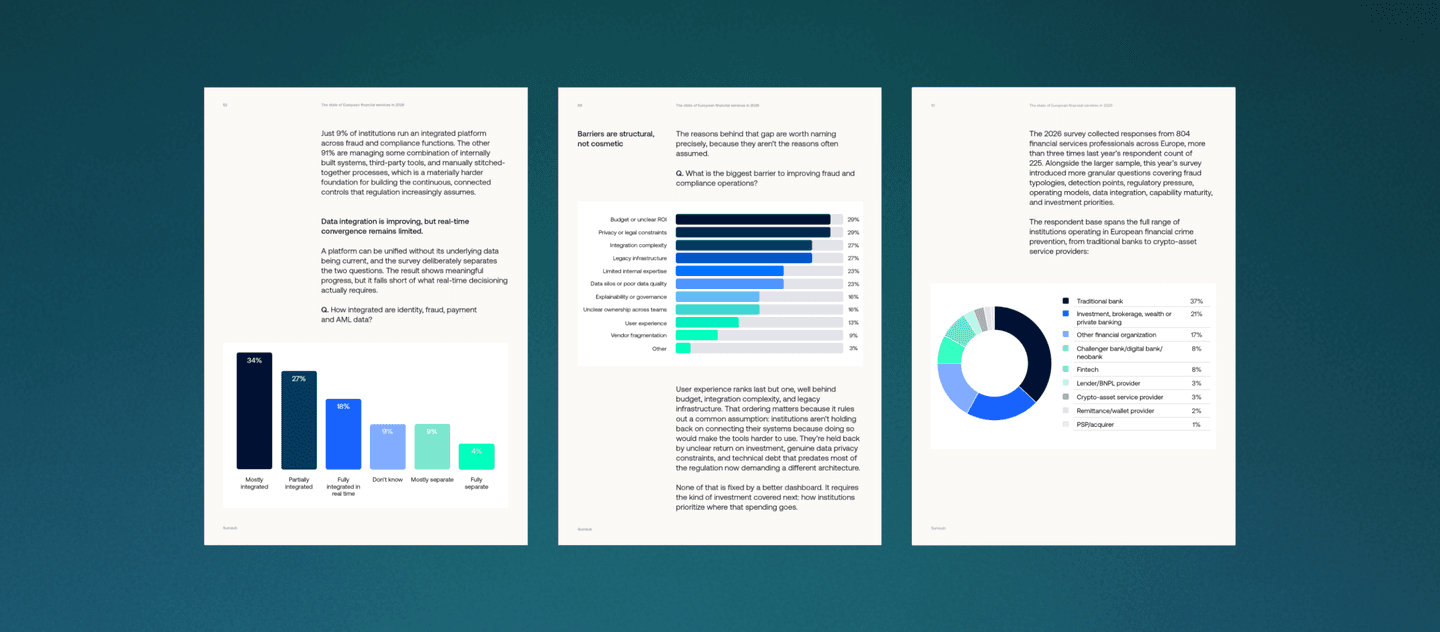
In Sumsub’s latest survey, only 17% of respondents say interpreting new regulation is their biggest challenge. Staff capacity, system integration, data quality, and budget all rank higher.
That changes the question. The issue is no longer just understanding fraud, compliance, and regulation. It is building the operating model to keep up.
Sumsub surveyed 804 fraud and compliance practitioners across Europe for the second annual State of European Financial Services report. The findings show where the gap now sits: between the controls institutions have, and the connected, real-time infrastructure they increasingly need.
Inside the report
- Why only 9% of institutions operate an integrated fraud and compliance platform — and how fragmented systems show up in manual review and slow investigations.
- How fraud has moved beyond onboarding into payment fraud, account takeover, and identity misuse.
- Where fraud is actually detected: at login, payment initiation, withdrawal, customer complaint, or after settlement.
- Which regulatory changes are expected to create the biggest operational impact, from instant payments and Verification of Payee to AML reform, DORA, the AI Act, MiCA, and the Travel Rule.
- How the picture changes by market, with regional snapshots covering the UK & Ireland, France & Benelux, DACH, Iberia, Central Europe, and the rest of Europe.