Business verification has quietly moved from a selective check on high-risk corporate accounts to the operating norm. The share of business customers undergoing BEV has grown from 44% two years ago to 60% today, with banks projecting 62% within two years — pushed by the U.S. Corporate Transparency Act, the EU AML Regulation's centralized beneficial-ownership registry, and the UK's Economic Crime and Corporate Transparency Act reform of Companies House. Even as regulation pushes institutions to verify entities and ownership universally rather than selectively, criminal networks keep exploiting shell structures and layered ownership to stay ahead of it.
The open question is no longer whether your business verification program needs to keep pace. It's whether it can actually resolve who's behind an entity fast enough to matter. Despite years of regulatory focus, 40% of banks still cite UBO identification as their single biggest BEV challenge, and 23% point to complex ownership structures. Only 1% of banks complete same-day automated BEV; 37.5% take three to five days, and 15% take six or more — with a single verification still averaging 30 minutes to two hours at nearly half of institutions. Meanwhile, 89% of banks say UBO verification is fully or mostly automated, which means the bottleneck isn't automation itself — it's registry interoperability, jurisdictional data quality, and beneficial-owner thresholds that are still maturing even as global registries like FATF Recommendation 24, the EU's centralized registry, and UK Companies House catch up.
Every buyer persona inside your organization also weighs this differently. A Chief Operating Officer, a Chief Information Officer, a Chief Technology Officer, a Head of Finance, and a Chief Risk Officer don't prioritize the same capabilities — and 87.5% of banks now prefer a one-stop or broad financial crime compliance platform for BEV over specialized KYB point solutions, reinforced by demand to integrate credit assessment directly into verification workflows.
We're here to help you cut through that complexity with this guide: Business and Entity Verification (BEV): Financial Crimes Compliance, Liminal's 2026 Index Report.
Inside you'll discover:
- What buyers across banks, fintechs, payment providers, capital markets, crypto, and regulated gaming actually rank as top purchasing criteria for BEV solutions — including where Internal User Experience, Scalability, and Accuracy/Automation/Compliance Alignment stand today
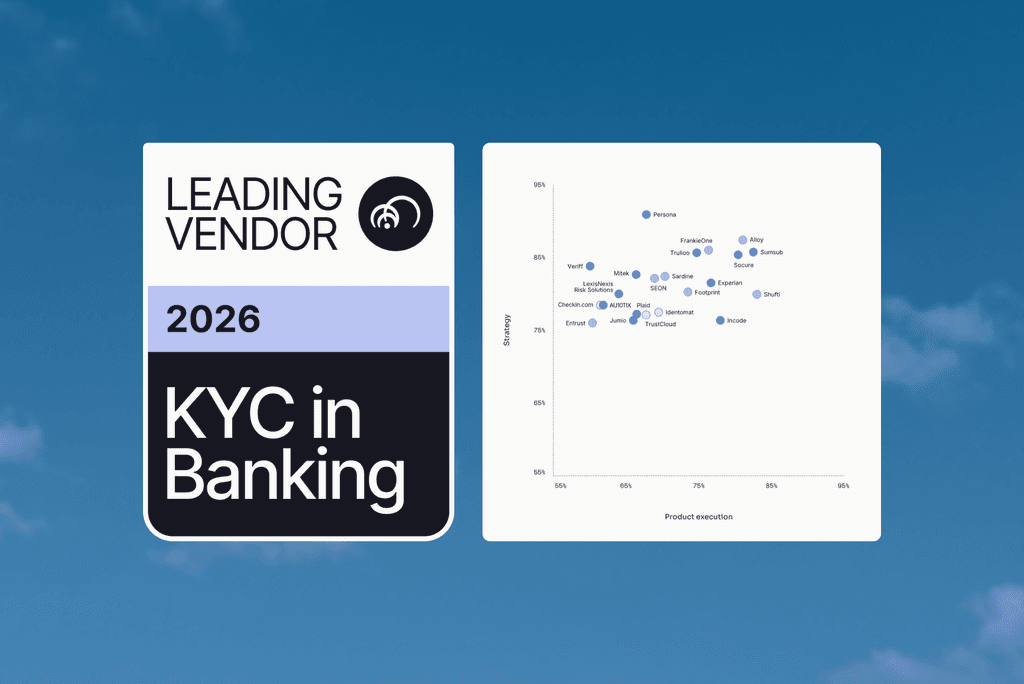
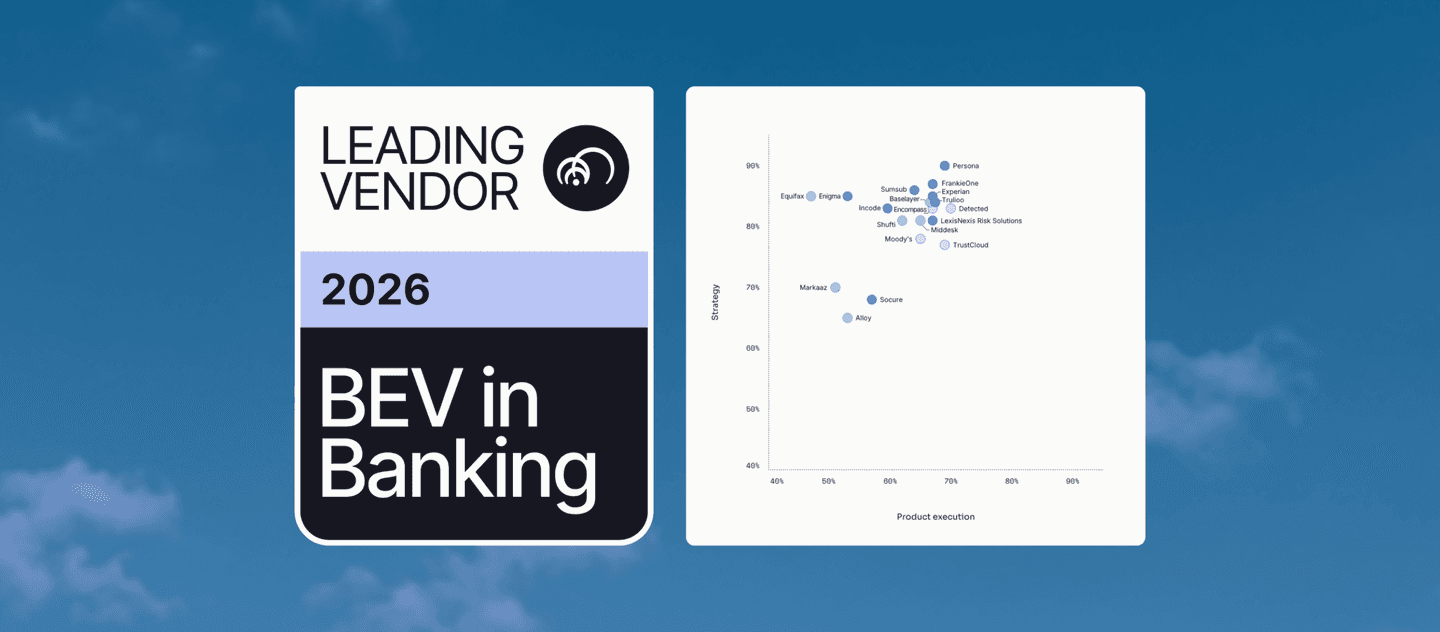
- How Liminal evaluated 86 vendors across product execution and strategy, and which 19 emerged as leaders for Business and Entity Verification in 2026
- How BEV buyer personas differ — a side-by-side look at what COOs, CIOs, CTOs, Heads of Finance, and Chief Risk Officers each need from a solution
- A practical map of the vendor landscape across three distinct approaches: Data-Driven BEV Providers, Business Verification and Compliance Platforms, and End-to-End AML Platforms with Embedded Business Verification — so you can see which model fits how your organization actually buys
You'll also get a look at how the market is trending: accuracy and data quality (25%) now lead the reasons banks switch BEV providers, ahead of price (22.5%) — confirming vendors compete on data depth, not feature breadth — while automation is the single largest rising purchasing criterion (+12.5 percentage points), as speed and self-service define the next cycle. Regulators are moving from checking whether a policy exists on paper to testing whether controls actually work — and this guide shows you what that bar looks like for your segment.
Sumsub is proud to bring you this report as one of the 19 Leading Vendors named in Liminal's 2026 Index for Business and Entity Verification.
Gain a clear, benchmarked view of what leading BEV programs look like in 2026, and close the ownership-visibility gaps before a regulator — or a shell company — finds them.
Best for banks, fintechs, payment providers, capital markets firms, crypto platforms, and regulated gaming companies — and the COOs, CIOs, CTOs, Heads of Finance, Chief Risk Officers, and compliance officers evaluating or renewing business and entity verification infrastructure.