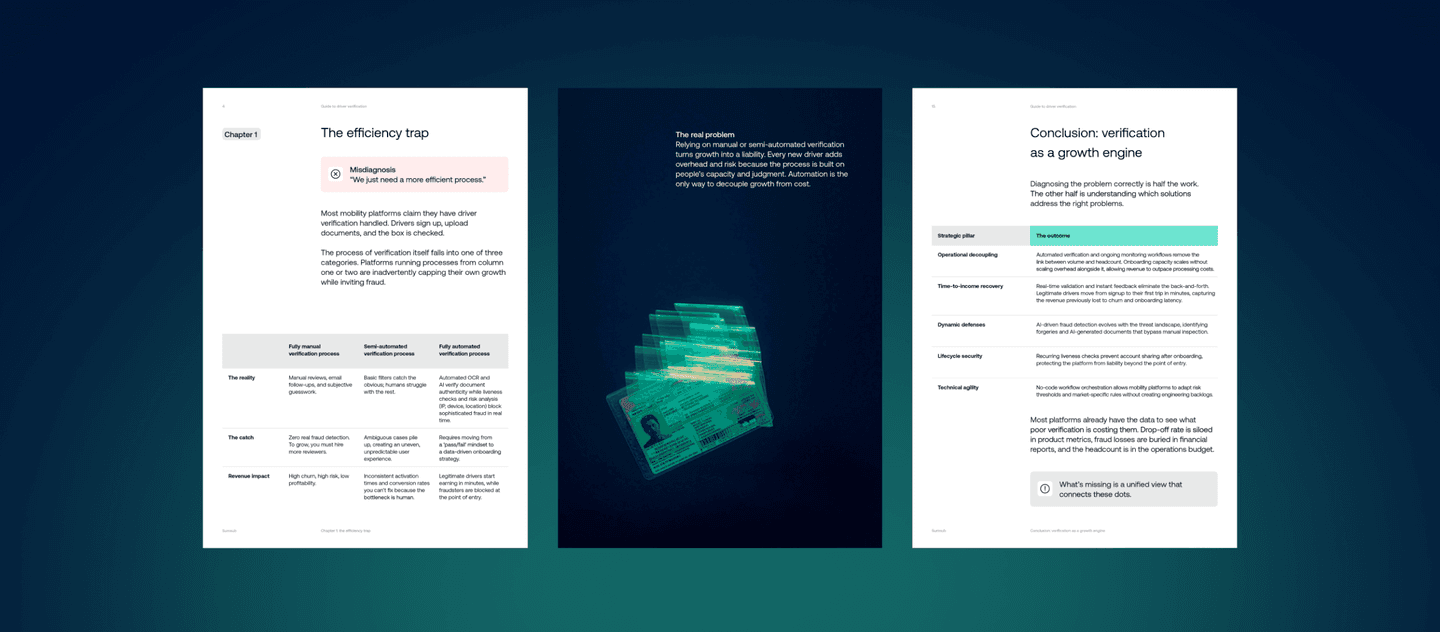
Explore the five verification problems that mobility platforms tend to misdiagnose, and the fixes that become apparent once the problem is identified correctly.
In most markets, mobility platforms are legally required to verify a driver's license before that driver can earn money through the platform. Because verification begins as a legal obligation, many teams measure it as one, while keeping the function as cheap as possible. The metrics show how efficiently verification runs, but they say little about the revenue it fails to protect or the fraud it allows through, which leads teams to look for the cause in the wrong places.
This guide explores the five driver verification problems that quietly limit how far a mobility platform can grow. Once you can see each problem for what it is, it usually turns out to be more fixable than it first appeared.
Inside, you'll find:
- The efficiency trap, and why a faster process does not address the underlying dependency that links every new driver to added cost and risk
- The expertise trap, and why even experienced reviewers can no longer keep pace with AI-driven fraud
- Three more traps that limit how far a platform can grow, in ways most teams miss until the cost has become too high, and
- What can help mobility platforms avoid all five traps, including the shifts that turn verification into a way to protect revenue rather than a cost center
Download the guide to driver verification today.