- Spotlight
- Nov 27, 2025
Building Trust Without Documents: Non-Doc Verification for More Inclusive KYC
In this interview, Vainius Fedotovas, our Head of Data Intelligence, discusses Non-Doc verification as a rapidly growing technology vital for modern compliance.


Today, we sit down with Vainius, our Head of Data Intelligence, to explore Non Doc verification as a rapidly growing technology that is becoming an essential part of modern compliance. Let’s get into it.
THE SUMSUBER: Thank you for having this chat with us, Vainius. Not all companies are using it yet, but “Non-Doc Verification” is becoming a buzzword in digital identity circles. How would you define it, and what makes it fundamentally different from traditional document-based verification?
VAINIUS: I would define it as the future of identity verification. For example, recent data from the UK market shows that over 54% of identity-verification providers still rely primarily on document-based methods. However, more and more businesses have been moving towards non-document-based systems. It’s been clear for some time now that this is the direction we’re headed towards globally, so what we’re doing at Sumsub is simply recognizing this fact. We understand that the future has arrived, and we want to bring it closer to businesses and users worldwide.
The fundamental difference from traditional online verification will be reflected in improved user experience and reduced rates of identity fraud, as well as business costs. My personal aspiration is for KYC processes to become so seamless that they can be easily integrated into customers' online operations as a standard part of their experience.
THE SUMSUBER: So, what’s actually driving the global shift toward document-free onboarding—is it regulation, user experience, inclusion, or something else entirely?
VAINIUS: The shift is enabled by a combination of several key elements, including, firstly, the technological novation, and, secondly, the adoption of those solutions by the regulatory authorities. That being said, I believe the drive behind this change, as with most technologies, comes from a simple combination of customer demand for an improved user experience and the business response to that.
Market adoption & inclusion
THE SUMSUBER: We’ve seen some rapid growth in identity-verification tech overall—industry reports project nearly 17% CAGR through 2030. How is Non-Doc contributing to this boom, and which sectors or regions are leading the charge?
VAINIUS: Naturally, the financial sector, which is the most sensitive to identity fraud, is leading the change. That being said, as more aspects of our daily lives transition to digital platforms, identity verification becomes a key component there, too.
That is why sectors like mobility, travel, and social media are now also becoming notable participants in this growth. Non-Doc Verification is simply here to aid with that transformation.
THE SUMSUBER: From Sumsub’s data, Non-Doc adoption grew more than threefold year-over-year. Can you deduce what’s behind that growth and where you’re seeing the strongest uptake?
VAINIUS: This adoption has been largely driven by a shift in how financial institutions view Non-Document Verification within the regulatory landscape. Compliance officers are becoming more comfortable with the idea that collecting physical identity documents isn’t the only or even the most effective way to onboard customers.
Our goal doesn’t stop at technical enablement. We make sure these solutions comply fully with local regulations and invest heavily in educating clients on how to implement them according to their business needs and, of course, regulatory obligations.
THE SUMSUBER: Inclusivity is often mentioned as a key advantage of Non-Doc Verification. How does it enhance inclusion in practice, especially in regions with developing ID infrastructures?
VAINIUS: Although the technology behind physical identity document verification and its connection to individuals continues to improve, the foundation of this method still has its limitations, especially considering the various ways in which an identity document can be manipulated. Non-Doc methods bridge those gaps effectively by using verified digital records and trusted data sources alongside Strong Customer Authentication methods for data ownership checks.
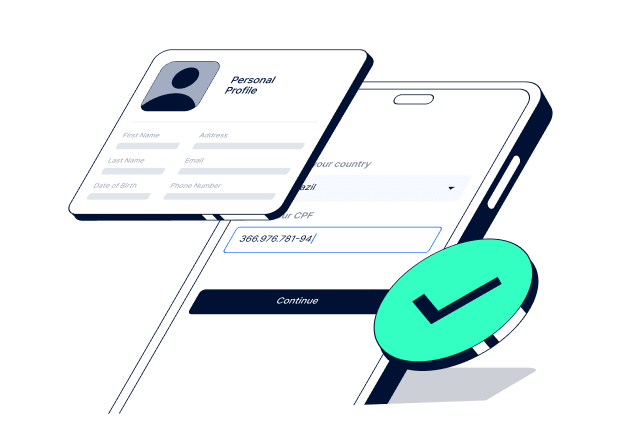
Emerging markets, especially in Africa, Asia, and the Americas, have made significant progress in creating national digital ID systems. These systems, along with Non-Doc Verification, help millions of users who were previously excluded from accessing digital services. For example, in Kenya, India, Brazil, and a number of other markets, our solution lets users identify themselves by simply providing their national identification number and biometric data. Sumsub is then able to retrieve verified data from official records and confirm its ownership, without a physical ID upload. This dramatically lowers friction for those who might not have high-quality documents at hand.
Technology, risk, & compliance
THE SUMSUBER: Since we’re mentioning technology, let’s talk about the tech behind it. What data sources and signals make Non-Doc possible, and how do you make sure it’s accurate without a document image to compare against?
VAINIUS: Currently, Non-Doc Verification uses both centralized and decentralized digital identity systems, along with official government and credit data. These systems help businesses verify the identity of users. They do this through Strong Customer Authentication, which gathers the necessary identity details and checks ownership using methods like biometrics, phone numbers, or device authentication.
THE SUMSUBER: It sounds very efficient! Despite that, some critics worry that Non-Doc might increase the exposure to fraud. How do Sumsub’s risk-scoring systems and fallback hybrid flows (document and non-document) address that concern?
VAINIUS: In recent years, many people have raised concerns about the risks of using Non-Doc Verification as the main way to onboard customers. However, the data tells a different story.
Among clients that switched to Non-Doc or introduced it as a fallback option, document and impersonation fraud dropped by up to 98%, according to our internal data. It’s much harder to falsify a verified government or credit record than to forge a physical ID. In fact, through Non-Doc verification, we’ve uncovered coordinated fraud networks in Nigeria and South Africa, which would have been nearly impossible using traditional methods. It involved the use of high-quality plastic ID cards, primarily from Asia, to bypass document-based verification in these countries’ markets. Our internal analysis showed a huge portion of these IDs were fake, but they passed verification due to the absence of database checks.
Global rollout and Sumsub’s know-how
THE SUMSUBER: We know Sumsub is expanding Non-Doc coverage to markets like Canada, Singapore, and South Africa. What challenges or differences have you observed across these jurisdictions when rolling out the solution?
VAINIUS: Every market has its own unique rules for identity verification. These rules include different laws for data protection and how businesses or customers use and accept products.
Before creating Non-Doc Verification, the team understood that expanding globally would be challenging. They knew these challenges would continue until clear digital identity guidelines were set up across regions. Over time, though, adopting an innovative and flexible approach to country-specific nuances has become Sumsub’s bread and butter.
THE SUMSUBER: Not many companies have the capability to offer fully compliant Non-Doc Verification. What’s Sumsub’s “secret sauce”? What’s unique in the approach or technology stack that others don’t yet have?
VAINIUS: Our “secret sauce” is the people and the platform. We’ve built cross-functional teams across Partnerships, Product, Legal, and Engineering that find solutions even when all odds are against us.
From a product perspective, Sumsub’s Verification Platform is what makes the difference. Identity fraud doesn’t stop at onboarding, and neither should verification. That’s why we’ve built an all-in-one system that covers the entire customer lifecycle, from onboarding and Transaction Monitoring to Risk Scoring and Payment Verification.
What’s ahead for Non-Doc Verification?
THE SUMSUBER: How do you see Non-Doc evolving over the next two to three years? Do you think it could become the default onboarding method in some industries?
VAINIUS: As I briefly mentioned earlier, I believe we can all agree that the future of verification is document-free. The key objective now is to ensure that the solutions developed by both government bodies and software companies are designed to successfully combine security and inclusiveness of the end-users and their personal information. This shift will change how organizations meet regulatory requirements and will encourage wider market adoption.
THE SUMSUBER: How do you think developments like digital IDs and verifiable credentials will interact with Non-Doc Verification—will they compete or complement each other?
VAINIUS: Our Non-Doc Verification system is built to include digital identity platforms, identity wallets, verifiable credentials, and other similar solutions. These tools will gradually replace traditional document-based customer onboarding. However, we will still support verification methods that rely on government and credit data for relevant situations.
THE SUMSUBER: And finally, what’s your message to compliance and product leaders who still rely on traditional, document-heavy onboarding? How should they start preparing for the Non-Doc future?
VAINIUS: Contact our Support team for a consultation, of course!
But more broadly, I’d say: start looking into hybrid verification strategies now. Understand your data ecosystem better, map out your risk tolerance, and partner with providers who already have experience navigating Non-Doc compliance worldwide. The future is closer than it looks.
Relevant articles
- spotlight
- Nov 19, 2025
In this post, Kat Cloud, Head of Government Relations at Sumsub, talks about reusable IDs and how they could impact onboarding in the future.


- spotlight
- Aug 20, 2025
Check out the interview with Corradino Corradi from MTN about the threats of the fraud-as-a-service trend in Africa.


What is Sumsub anyway?
Not everyone loves compliance—but we do. Sumsub helps businesses verify users, prevent fraud, and meet regulatory requirements anywhere in the world, without compromises. From neobanks to mobility apps, we make sure honest users get in, and bad actors stay out.
