- Spotlight
- Jul 07, 2026
I Spent Years Being a Fraudster: The System Was My Accomplice
Hello there, I’m Alex. I was a fraudster for most of my life. I pulled off schemes worth millions of pounds, and there are scams I’m even proud of—pieces of fraudulent art. Did I think I could remain a fraudster for my entire life? Well, definitely.

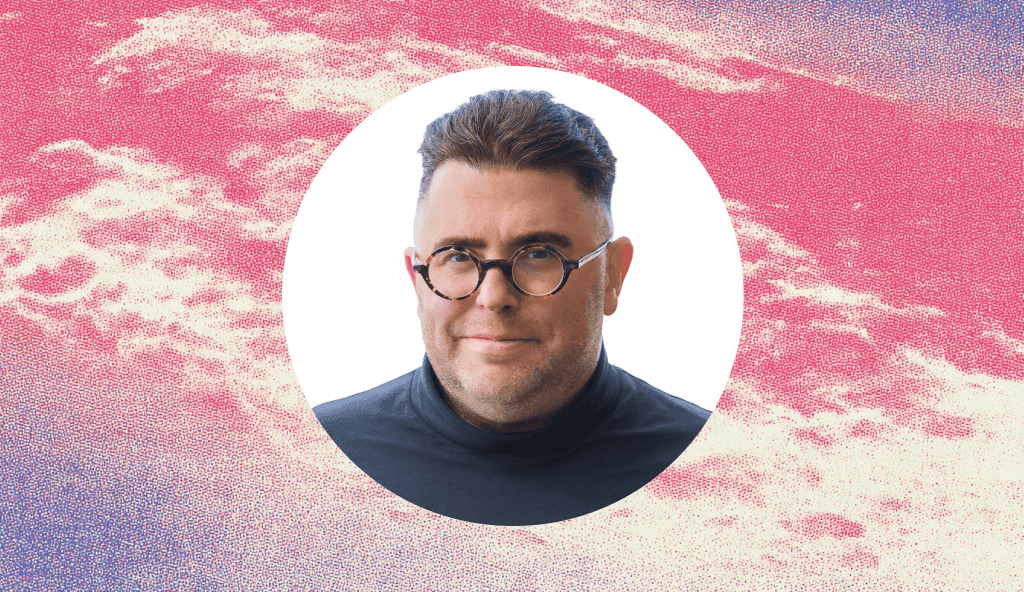
Hello there, I’m Alex. I was a fraudster for most of my life. I pulled off schemes worth millions of pounds, and there are scams I’m even proud of—pieces of fraudulent art. Did I think I could remain a fraudster for my entire life? Well, definitely. It’s quite intoxicating to be able to spend £50K on a night out in London. It’s quite seductive to live like a duke in famous hotels, paying nothing. Then I sat in court and heard victims describe what my crimes had done to their lives. That was the time I stopped thinking about fraud as a game.
Honestly, when fraud becomes your job, you stop thinking about other people at all—you tell yourself that systems are greedy, that they have enough money to feed everyone, including your own small need for a touch of luxury. That was how I justified it.
So, four years ago, I changed sides and became an anti-fraud consultant. Some things in this job still take me aback. For example, most people think a fraudster is a special type of person, probably from a miserable, dysfunctional family. That is not true.
Nobody is ever born a fraudster, and the path into fraud is rarely the same. For some, it's driven by financial pressure. For others, it's greed, ideology, ego, or the adrenaline that comes from taking risks. Throughout my eight years spent in prison (across three sentences), I met various individuals. I got to know low-level fraudsters from violent street gangs (who tended to specialize in courier fraud and the sale of "deets" and "fullz"). And I shared cells with the likes of Achilleas Kallakis (who stole over £740m from Allied Irish Bank and owned commercial properties rented to the UK Government) and Peter Skinner, a Member of the European Parliament who stole £132,434 in fraudulent expense claims. And everybody in between... some of whom had never been to school and others, like me, who had more than one university degree.
So, I have something to tell you.
I wasn't born a fraudster—I became one
Nobody grows up dreaming of becoming a professional fraudster (I was actually going to become a violinist). Criminal careers usually begin with small opportunities that seem almost too easy to ignore, like a missing control, an unchecked process, or a system that trusts people more than it should. Opportunity creates offenders just as much as motivation does.
People often imagine fraudsters as a distinct breed—calculating, ruthless, somehow different from everyone else. But the truth is, there are clusters, hierarchy, and career paths, like in any industry. Modern fraud is an ecosystem built on specialists: masterminds, recruiters, money mules, script readers, insiders, coerced workers, opportunists, and service providers. Some are hardened criminals. Others are exploited, indebted, lonely, ambitious, angry, or simply one bad decision away from becoming useful to a criminal network.
My own journey didn't begin with a multimillion-pound scam. It began behind the till of a well-known department store when I was 16. It was 1997, before everything was digitized. Gift vouchers weren't logged electronically; books of vouchers simply sat in a drawer beneath the cash register. Every so often, at the end of a shift, I'd slip one into my bag. I sold the vouchers to friends from school for half their face value. Nobody noticed, nobody reconciled the stock, and nobody asked any questions.
It wasn't just the money that hooked me, of course. Suddenly, I had more cash than anyone else in my class. I could buy things other teenagers couldn't. God, I became so popular! And I discovered something intoxicating: the system could be broken.
That first success planted an idea in my mind. Not that I was lucky—but that I was clever, smarter than the systems out there.
Once you've crossed that line and nothing happens, the next step feels smaller than the first. The risks increase, but so does your confidence. Credit card fraud became mobile phone fraud. Mobile phone fraud became trading scams, student loan fraud, and eventually VAT fraud.
Each successful fraud reinforces exactly the wrong lesson
I was teaching myself that I was smarter and that the rewards outweighed the risks. If I'd got away with it ten times before, I'd get away with it an eleventh. Success breeds overconfidence, and overconfidence breeds bigger risks.
Looking back, I can see how my career in fraud began with the desire to have a little extra cash at school. I then began to rely on the extra cash to fund my lifestyle. This soon developed into pathological greed and a lavish lifestyle in which I commuted across the UK in a helicopter and would routinely spend thousands of pounds on a night out.
For years, I convinced myself I was untouchable, until the day I wasn't. Eventually, I was sentenced to three years in prison for running an investment fraud that targeted several leading spread betting platforms. The system that had rewarded me for years finally caught up with me.
But as it turned out, there was little to regret—prison pushed me to the next level of fraud.
Prison didn't end my career in fraud—it professionalized it
Prison was a networking platform for fraudsters. It was a training camp, a hothouse, a university. Oh, believe me, it didn't "fix" me—quite the opposite, it exposed me to specialists. I learned how to commit more sophisticated frauds, and I met people who knew how to launder money on an industrial scale.
Upon my release, I teamed up with these people, and my offending jumped up several notches. I had learned that, due to the constraints of the Fraud Act 2006, whether I stole £1 million or £1 billion, the maximum sentence in the UK was always capped at 10 years. If I pleaded guilty, I would receive a one-third reduction and then serve only around 40% of the remaining sentence. In other words, if I were caught again—and that's always a big "if" in the mind of a fraudster—I calculated that I'd face a maximum of around two and a half years behind bars. Why stop there?
And so I unleashed a devastating crime wave, committing Authorized Push Payment fraud and netting millions of pounds, wrecking businesses in the process. Sure enough, when I was eventually caught, I served a couple of years in prison for those offenses.
The biggest mistake is believing every fraudster has the same motive
Each and every person committing a crime has their own reasons.
My criminal gang would recruit others to assist in the perpetration of fraud for different roles. We learned how to identify vulnerable bank cashiers (often single mothers who needed extra cash)—they could assist us in cash withdrawals from mule accounts.
I also know a guy whose primary motivation to commit crime is religious ideology, who’s fanatical. He traveled illegally to the UK (in the footwell of a lorry) with the sole intention of defrauding the UK economy, and he laundered his cash back to his home country via the Hawala network—the same network also moved money for some terror organizations. That guy was, and remains, a thoroughly dangerous threat to Western economies.
Different motivations—all exploiting the same weak systems
At the end of the day, the systems allow fraudsters to do what they do.
My very last stint in prison coincided with COVID19 and the launch of the Bounce Back Loan Scheme.
On April 27, 2020, the scheme was announced by HM Treasury and launched on May 4, 2020. Then, a number of fraudsters in prison spotted that the algorithm through which the Government (via the banks) issued the loans considered three key factors: that a limited company existed at Companies House, that the company had a UK bank account, and that the company had been adversely affected by the pandemic.
Through trial and error (using iPhones which had been thrown over the prison walls), it was spotted that the algorithm did not verify the date of the company's incorporation, nor did it check whether the company had been adversely affected by the pandemic; a mere assertion was good enough.
Applications were processed on the basis of what was declared, not what was proven. A company, a bank account, a statement of need—that was enough. No one seemed to ask the most obvious question: whether the company had existed before the crisis began.
It was a small omission, almost trivial on paper. But inside HMP Highpoint (where I was being held), it opened a gap wide enough to drive a bus through. It was not a loophole so much as an invitation.
The man who built the Bounce Back thing was Rishi Sunak. By the time he walked into Number 10 as Prime Minister two and a half years on, the Bounce Back Loan Scheme had opened a financial black hole estimated at up to £20 billion in defaults and fraud combined. He didn't inherit that hole. He'd signed it into existence. And the vast majority of that money has never been recovered.
Fraud is always driven by many different motivations. But each exploits the same weak systems. Systems create opportunities, and fraudsters notice them first.
Don’t ask who fraudsters are—make fraud expensive
People want fraudsters to have one face and one reason. It would make us (well, them) easier to fear and easier to catch. But I did it out of greed and vanity. Some do it out of ideology. The cashiers who emptied the mule accounts did it because they desperately needed money, and someone offered them a way out of being broke. And the system never needed to understand a single one of them, it only needed to leave the door open. It did, so they used it.
You can’t really screen for motive. You will never build a filter that catches the angry, the desperate, the devout, and the merely greedy in one pass, because fraudsters don't look alike and they don't want the same things. But what fraudsters share for sure is an opening. Every fraud I ran worked because a system trusted a claim it had never checked.
And here is the thing nobody likes to admit: an open door isn't neutral. To the right person on the wrong day, an easy system becomes a suggestion. Build systems that take people at their word, and you aren't only failing to stop fraud, you're recruiting for it.
The fixes are not exotic or revolutionary: verify the claim, not the confidence behind it. The moment something has to be proven rather than asserted, most of what I did becomes impossible. Layer the controls so one failure isn't fatal, the way a vault never rests on a single lock. Make fraud traceable and expensive, because every fraudster runs the arithmetic I ran in my cell, weighing what I might gain against what I might lose, and a sentence cap of ten years lost that argument every time. Tilt the sum instead. And in an age of cloned voices, generated faces, and borrowed identities, accept that a document, a selfie, or a voice on the phone proves nothing on its own.
I'm not telling you this because I found God or grew a conscience the size of a cathedral. I'm telling you because I know exactly how I was made, and it wasn't bad parenting or a broken childhood. It was open doors. Close them, and the next version of me doesn't get started.

Relevant articles






What is Sumsub anyway?
Not everyone loves compliance—but we do. Sumsub helps businesses verify users, prevent fraud, and meet regulatory requirements anywhere in the world, without compromises. From neobanks to mobility apps, we make sure honest users get in, and bad actors stay out.
