Stablecoin compliance in 2026: which rules apply to your business
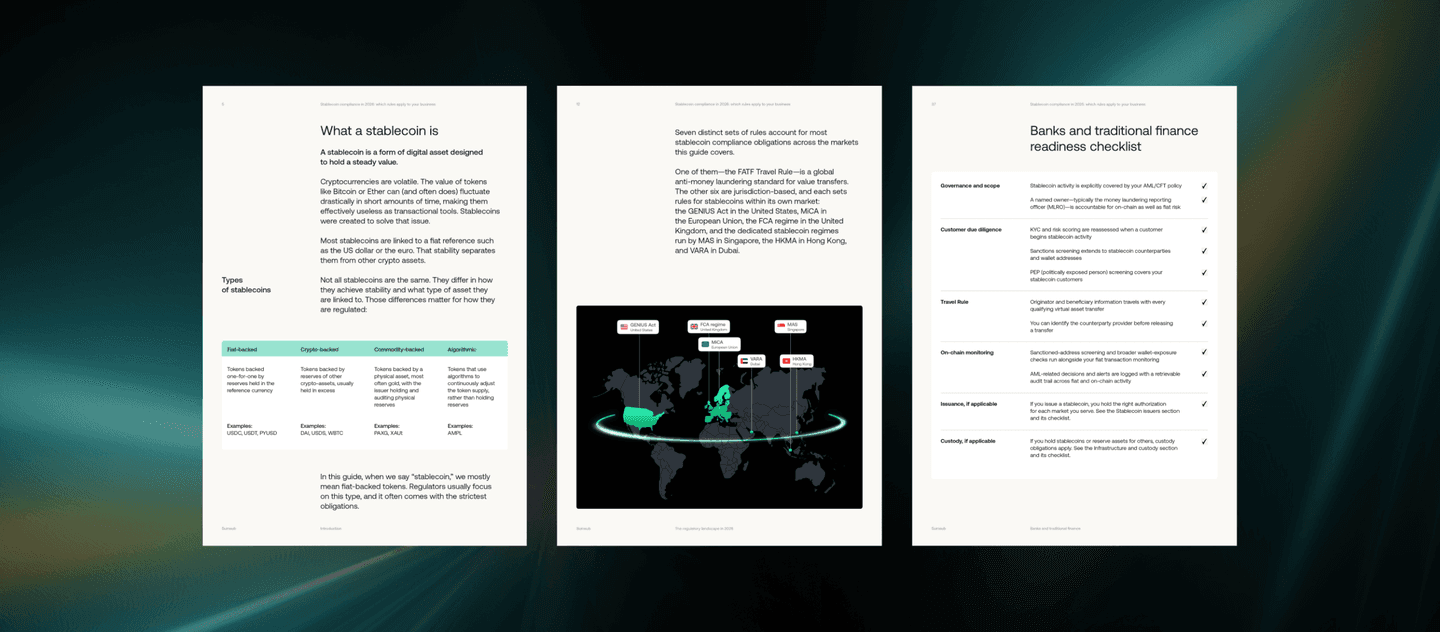
Stablecoins have moved from a crypto-trading tool to a regulated financial instrument in every major market. Between 2023 and 2026, the GENIUS Act, MiCA, the UK's FCA regime, and dedicated frameworks from MAS, the HKMA and VARA all came into force — on top of a rewritten FATF Travel Rule.
The open question is no longer whether stablecoin activity is regulated. It's which rules apply to your specific activity — and that answer is rarely simple. A bank, a wallet provider, a payments processor, and a card program can all process the same stablecoin and face entirely different obligations, depending on whether they issue it, custody it, move it, or simply let customers spend it.
Each framework also uses its own vocabulary for similar ideas, and they don't cancel each other out. If you operate across borders, several regimes can apply to the same token at once — and your compliance program needs to meet the strictest one, not the lowest common denominator.
We're here to help you cut through that complexity with our new guide: Stablecoin Compliance in 2026.
Inside you'll discover:
- What the seven frameworks that matter — GENIUS, MiCA, the FCA regime, MAS, HKMA, VARA, and the FATF Travel Rule — actually require, and where each one stands today
- How obligations differ depending on what you do: issuing, custody, payments, wallets, banking, or card programs
- The common pitfalls compliance teams hit when stablecoin activity gets bolted onto an existing program instead of built into it
- A practical readiness checklist for each business segment, so you can test whether your controls are keeping pace with regulatory expectations
You'll also get a look at how the rules are trending: adoption of the FATF Travel Rule has now reached 83% of surveyed jurisdictions, up from 73% a year earlier, while stablecoins' share of crypto transfers has climbed from 31% to 36%. Regulators are moving from checking whether a policy exists on paper to testing whether controls actually work — and this guide shows you what that bar looks like for your segment.
Gain a clear, jurisdiction-by-jurisdiction view of what applies to you, and start closing the gaps before a regulator finds them.
Best for banks, stablecoin issuers, payment processors, custodians, wallet providers, card issuers, and compliance officers.