- Spotlight
- Mar 19, 2026
Capital Follows Trust and Clarity: Singapore’s Gravitational Pull in APAC’s Crypto Markets
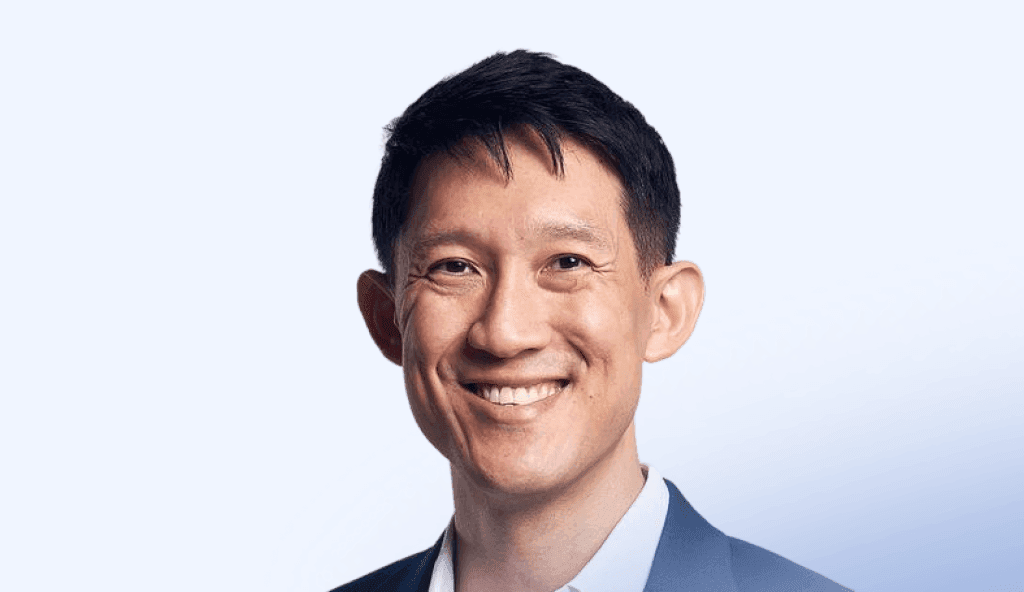
Chin Tah Ang, General Manager Singapore at Crypto.com, reflects on Singapore’s digital asset leadership, stablecoins, and tokenization in APAC, as well as reveals the key macro trend shaping the digital assets industry in APAC.

Singapore remains one of Asia’s leading hubs for institutional digital assets. As of 2025, the Monetary Authority of Singapore (MAS) has granted dozens of Digital Payment Token licenses, making it one of the most tightly regulated and institutionally active crypto markets in the region. Its edge comes from regulatory clarity, deep capital markets, and its position as the world’s third-largest foreign exchange center and a leading global asset management hub.
At the same time, other APAC crypto hubs have moved quickly to expand digital asset licensing and retail participation. Hong Kong, for example, is positioning itself as a gateway to Mainland Chinese capital.
As regional frameworks evolve, a broader question emerges: Do differing regulatory approaches across APAC risk fragmenting liquidity and standards, or could they ultimately create a more resilient and diversified digital asset market?
Today, we sit down with Chin Tah Ang, General Manager Singapore at Crypto.com, to discuss Singapore’s regulatory model, the role stablecoins could play in cross-border trade and remittances, the macro trends likely to shape APAC between 2026 and 2030, and the barriers still holding back institutional tokenization.
Regulatory collaboration: Singapore’s edge vs. other APAC countries
THE SUMSUBER: Chin Tah, thank you for joining us today. In a period marked by geopolitical tension, inflation cycles, and shifting capital flows, investors are reassessing how they diversify risk and allocate capital. Digital assets are increasingly part of that conversation, and Singapore has positioned itself as one of the region’s most trusted regulatory environments.
How important is the collaboration between MAS, traditional banks, fintech firms, and digital asset players in sustaining Singapore’s leadership position? Can this model realistically be replicated elsewhere in APAC?
CHIN TAH ANG: Singapore’s leadership is definitely attributable to having rules, but most importantly, it’s about how these rules are applied across the financial system.
MAS set clear licensing standards early on—and traditional banks, payment providers, and digital asset firms chose to align with those standards. Such shared effort reduces friction. It means a licensed crypto platform can secure banking relationships, integrate with payment rails, and operate within the broader financial system instead of alongside it.
In many markets, regulation exists, but integration lags. Firms may be licensed, yet still struggle to access banking services or settlement infrastructure. In Singapore, coordination across regulators and financial institutions has minimized that disconnect. That creates stability and makes the jurisdiction more attractive to institutional players.
THE SUMSUBER: So in that sense, trust becomes the key currency of the system?
CHIN TAH ANG: Yes. Trust is the central factor. Institutional investors will not allocate capital into environments where regulatory expectations are unclear or enforcement is inconsistent. Singapore’s approach gives them visibility: they understand the rules, the supervision model, and the compliance standards required.
The AML/CFT Industry Partnership (ACIP) is a practical example of how this works. It enables structured information sharing between regulators, banks, and fintech firms. That strengthens risk management across the ecosystem rather than leaving each player to operate in isolation.
Can this model be replicated elsewhere in APAC? Generally speaking, yes. However, every jurisdiction has its own unique context, circumstances and constraints, which must inform their respective regulations and strategies. Replication therefore requires coordination between regulators and financial institutions and consistent enforcement in order to create a practical foundation on which all stakeholders can collaborate
Markets that pair regulatory clarity with clear guardrails are more likely to attract long-term institutional capital. Markets that don’t may see activity, but it will be more fragmented and less stable.
Stablecoins and cross-border financial flows in Southeast Asia
THE SUMSUBER: Couldn’t agree more. Trust and regulatory clarity are clearly central to Singapore’s approach. If trust is the foundation, stablecoins may be one of the first real tests of that framework. What role could Singapore-regulated stablecoins play in cross-border trade and settlement within Southeast Asia and the broader region, and how might this reshape regional financial flows?
CHIN TAH ANG: Stablecoins are moving beyond retail experimentation and becoming part of institutional financial infrastructure.
Singapore-regulated stablecoins can act as trusted digital settlement instruments that bridge traditional fiat currency and blockchain-based systems. MAS has signaled that, under proper supervision, stablecoins can play a meaningful role in future financial networks. If implemented carefully, these instruments could become a trusted layer for cross-border trade in Southeast Asia, complementing—not replacing—the existing banking system.
The immediate benefit is reduced friction in cross-border payments. Traditional international transfers often involve multiple intermediary banks, limited operating hours, and layered fees. Stablecoins can operate 24/7, settle in near real time, and provide clearer transaction visibility.
In Southeast Asia, remittances are a major economic driver. Millions of migrant workers send money home each month. Even small fee reductions can make a material difference relative to income. Stablecoins can lower transfer costs and shorten settlement times compared to some traditional remittance channels.
For businesses, stablecoins can improve treasury management. Companies with regional payables and receivables can reconcile transactions faster and reduce the time capital is tied up in transit. Faster settlement improves cash flow planning and reduces counterparty risk.
THE SUMSUBER: Cross-border payments are one side of the story, but what about compliance? How do stablecoins fit into existing financial oversight frameworks?
CHIN TAH ANG: From a compliance perspective, public blockchain transactions are traceable. When combined with strong KYC and transaction monitoring systems, this transparency can strengthen oversight. Suspicious flows can be flagged and investigated with greater precision.
Adoption, however, depends on integration with familiar financial infrastructure. Compliance standards must mirror those already expected in traditional finance—clear monitoring, reporting, and escalation protocols.
We are also seeing markets globally introduce specific stablecoin regulation, the likes of Europe with MiCA, the United States with the GENIUS Act, and here in Singapore as well. These kinds of frameworks are going to be needed as the stablecoin industry matures and evolves. So, as much as the stablecoin sector should, of course, have similar compliance standards to traditional finance, we do need to remember that this is a new technology and should also have its own well-defined regulations.
2026–2030: The defining macro trend for digital assets in APAC
THE SUMSUBER: Looking ahead to 2026–2030, which macro trend will most shape digital assets in APAC, in your opinion?
CHIN TAH ANG: I’m sure regulation will be the defining factor.
Clearer, more consistent rules across major APAC markets will drive institutional adoption. While regulations will differ by jurisdiction, we are starting to see similarities emerge—particularly around licensing standards, stablecoin reserve requirements, AML expectations, and disclosure obligations.
I’d also say that in APAC, regulation is a gravitational force shaping the industry. Capital tends to orbit the jurisdictions where the rules are clearest. When institutions know exactly what the compliance playbook looks like, the allocation conversation becomes much easier.
Full global coordination may be difficult. However, gradual convergence around core principles is realistic. As the industry matures, regulators are learning from one another, and frameworks are becoming more structured and detailed.
Institutional capital flows tend to follow regulatory certainty. When asset managers and banks understand how digital assets are classified, how custody must be structured, and what reporting standards apply, internal risk committees are more likely to approve exposure.
Stronger regulation builds trust. Trust attracts both institutional and retail participation. Over time, that broader participation supports deeper liquidity and more stable market development.
Institutional tokenization in APAC: Adoption and barriers
THE SUMSUBER: Now, let’s turn to obstacles. What key barriers still prevent tokenization from moving fully mainstream across APAC markets?
CHIN TAH ANG: Tokenization of real-world assets—such as bonds, funds, and structured products—has seen encouraging pilots across APAC, including in Singapore. But the market remains small relative to traditional capital markets.
Several barriers still need to be addressed, namely:
First: Legal and regulatory clarity. Institutions need a clear classification of tokenized instruments. Are they securities? How do existing rules apply to issuance, distribution, custody, and secondary trading? If legal treatment is uncertain, risk committees hesitate.
Second: Liquidity and secondary markets. Tokenized markets are still shallow. Thin trading volumes make price discovery difficult. Institutions require reliable entry and exit conditions before committing meaningful capital.
Third: Operational integration. Tokenized assets must move smoothly across systems. If new blockchain-based processes create reconciliation issues or compliance gaps, institutions will stick with existing infrastructure. The goal is to simplify operations, not add complexity.
Fourth: Custody standards. Institutional investors expect asset segregation, auditability, resilience, and clear liability frameworks. If custody models are fragmented or responsibilities are unclear, risk increases. Clear standards are essential for mainstream adoption.
Regulated exchanges and platforms are well positioned to address these challenges, particularly around secure custody and compliance integration. We see tokenization as a natural evolution of financial markets. But widespread adoption will depend on aligning blockchain innovation with the operational and regulatory expectations of institutional finance.
So, to conclude, I’d like to emphasize that across regulation, stablecoins, and tokenization, trust is the foundation of sustainable digital asset growth. Singapore’s advantage lies in coordinated regulation, institutional integration, and consistent enforcement. That alignment reduces friction, strengthens risk management, and gives investors the certainty they need to allocate capital with confidence.
Speaking more APAC-wide, as APAC’s digital asset landscape continues to evolve, markets that combine innovation with clear standards and practical infrastructure will be best positioned to attract long-term institutional participation. The next phase of growth will not be driven by speculation alone, but by credibility, interoperability, and the ability to embed digital assets into the core of the financial system.
Relevant articles


What is Sumsub anyway?
Not everyone loves compliance—but we do. Sumsub helps businesses verify users, prevent fraud, and meet regulatory requirements anywhere in the world, without compromises. From neobanks to mobility apps, we make sure honest users get in, and bad actors stay out.
