- Dec 12, 2025
- 5 min read
Cyber-Fraud Fusion: Insights from the WTF Summit Panel
Dive into insights on the convergence of cyber threats and innovations driving real-time fraud prevention, as discussed on one WTF summit panel.

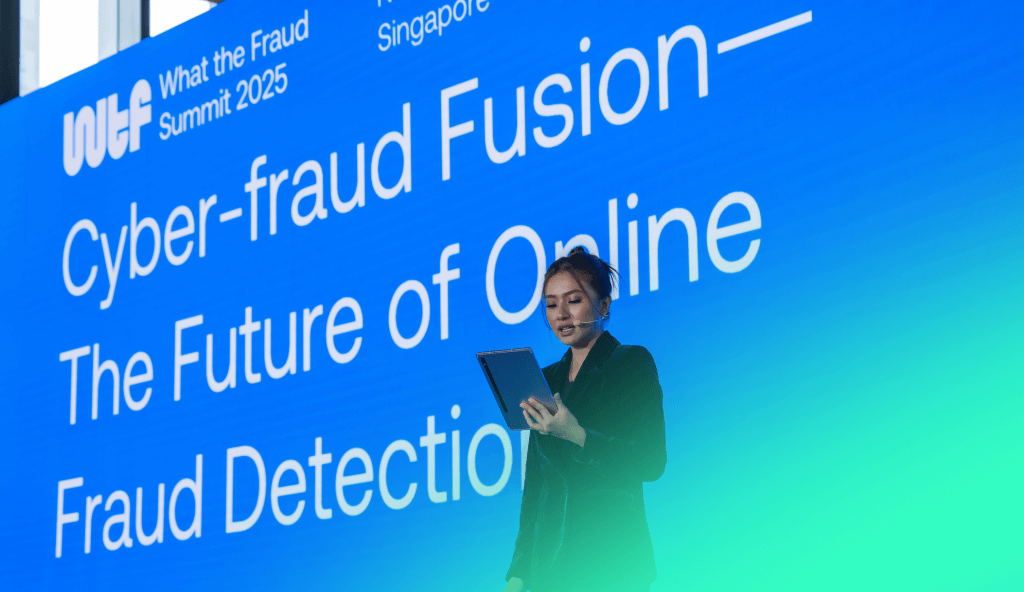
At the What The Fraud Summit 2025, the panel “Cyber-Fraud Fusion—The Future of Online Fraud Detection” captured a shift that many risk and compliance teams are already sensing: the old boundaries between cyber threats and compliance are dissolving. What used to be separate worlds with their own tools, teams, and priorities is merging into one complex battlefield.
Companies are still adjusting to the reality that criminals have already fully embraced.
The speakers—Amaresh Mohan (Flutterwave), Karthik Ramanathan (Mastercard), Simon Liu (NTU), and Juon Qiang Yin (DBS Bank)—didn’t mince words. Fraudsters today work like well-organized businesses. They are connected, operate across borders, and can share resources easily. In contrast, legitimate companies struggle with isolated data and outdated rules that are no longer applicable to today's risks.
The discussion made it clear that this gap won’t close on its own.
The problem isn’t just criminal ingenuity; it’s disconnected data
In the session, the moderator, Pasi Koistinen, raised a question of criminals moving faster and faster. This was continued with a simple observation from Simon Liu: even the most sophisticated organizations still struggle with fragmented data architectures.
Customer identity lives in one system. Device signals live in another. Behavioral analytics in a third. Transaction intelligence somewhere else entirely. Even within one bank, the data required to understand a suspicious pattern may be locked behind four different teams.
Fraudsters don’t face this problem because they share signals instantly and coordinate attacks globally. They also use the same playbooks across platforms. The imbalance is structural.
The good news is that the industry is beginning to break this cycle. Many large institutions are moving toward entity resolution, which is stitching every piece of customer information into a single source of truth. Others are building graph databases that reveal hidden connections between threat actors: a device linked to six accounts, an IP reused across multiple merchants, a behavioral sequence that mirrors a known scam pattern, and any other suspicious action.
Then, Karthik Ramanathan explained there’s the rise of sequential modeling, a technique that was originally developed to process long sequences of text (like the ones used for large language models). That same technology, repurposed for fraud defense, can analyze the entire customer journey, from how they logged in, navigated pages, changed settings, to a finally attempted transaction. Instead of looking at a single event, companies can examine the story behind it.
Even more promising are unsupervised AI tools that can search for anomalies without being told what to look for. In an era where fraud morphs daily, the ability to surface “unknown unknowns” is becoming essential.
From internal silos to connected intelligence
Technology, however, is only one part of the equation. The organizational reality is often the bigger obstacle.
Most companies still divide fraud, cybersecurity, compliance, and customer support into separate teams with their own incentives and KPIs. As one panelist put it,
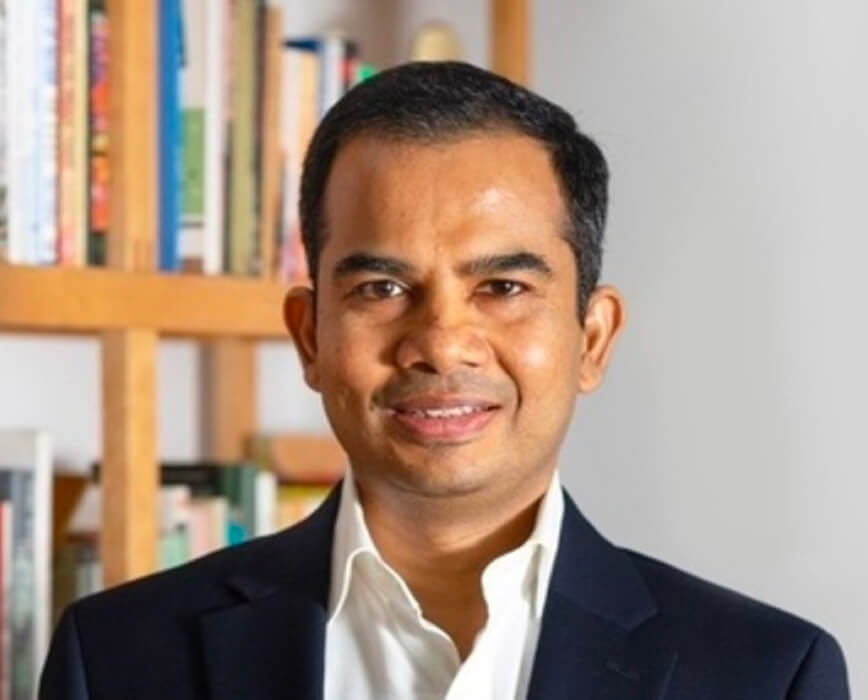
Amaresh Mohan
Chief Risk Officer, Flutterwave
This isn’t a matter of poor strategy but of structure.
Fraud teams focus on chargebacks and scams.
Cyber teams focus on intrusion and authentication risk.
Compliance teams focus on KYC/AML and regulatory exposure.
All of these risks overlap. A compromised email can lead to an account takeover, which in turn can result in a fraudulent transaction. That fraudulent transaction exposes the organization to AML risks. Despite this, many organizations treat these as unrelated incidents handled by different departments.
The panelists stressed that solving this disconnect requires three things:
- shared goals, so teams stop optimizing against each other;
- shared technical capabilities, so data isn’t bottlenecked inside one single department;
- and connected customer histories, so that every part of the lifecycle (onboarding, login, authentication, disputes, and so on) is part of a unified picture.
This kind of alignment is the foundation for everything else, including cross-industry collaboration.
Fraud doesn’t start at the transaction
A particularly striking part of the discussion reframed how organizations should define a “transaction.”
The industry usually thinks that the risk starts only when money is transferred. However, in many situations, the risk actually begins earlier. It starts when someone creates a fake account, switches a phone number, makes sudden changes to a device, or when someone's behavior becomes unusual.
By the time a suspicious transfer reaches a bank, the scam is already well underway.
Identifying unusual patterns—such as unexpected phone numbers, IP addresses, devices, and login methods—is now as important as verifying the payment itself. This is especially crucial for real-time payments, where the time to act drops from hours to just seconds.
In short, the industry must treat digital identity changes as part of the transaction lifecycle, rather than as a peripheral aspect of it.
The hardest challenge: global coordination against global crime
The speakers turned next to a systemic barrier: cross-border and cross-industry collaboration.
Scam syndicates can operate seamlessly across various platforms, including telecommunications, social media, online marketplaces, banks, and payment apps. They migrate instantly when one platform shuts them down. Companies, however, still face limits due to government rules, competition issues, and different views on privacy.
As Juon Qiang Yin from DBS Bank noted, progress requires reaching “critical mass”, which means not just a few large players collaborating, but entire industries moving in unison so criminals can’t exploit their weak points.
Two main approaches will guide this development. First, through enabling teamwork by creating safe spaces, shared decision-making frameworks, and groups such as the Global Signals Exchange or the Global Anti-Scam Alliance. Second, by encouraging participation, along with setting clear rules about responsibilities. This will motivate organizations to join in rather than benefit without contributing.
Without both forces, fraudsters will continue to move faster than legitimate institutions can respond to the threats.
Privacy vs. security is a false choice
One of the most important takeaways of the panel was the industry’s persistent misconception that privacy and security are opposing forces. In reality, consumers demand both, and the technology exists to provide both.
Non-PII signals can reveal enormous amounts of fraud intelligence without exposing personal data. Examples include domain authentication (used to block fraudulent emails posing as PayPal or Zara, or any other prominent firm), device fingerprints, behavioral sequences, or metadata shared through public–private partnerships such as GovTech Singapore. These signals can significantly limit the reach of scam networks while still respecting user rights.
The issue isn’t the lack of data, but rather of alignment and the fear of sharing even low-risk intelligence.
Shared responsibilities will define the future
The discussion ended with a call to rethink how the industry shares responsibility for online transactions. In the physical world, the introduction of chip cards created a clear change in liability: if merchants did not upgrade to chip terminals, they took on the risk of counterfeit fraud.
No such consensus exists online.
Who is responsible for the authentication?
For device vetting?
For behavioral monitoring?
For identity verification?
Without clearly defined roles, fraud just moves downstream until someone absorbs the loss. Industry groups, such as GASA (Global Anti-Scam Alliance), are attempting to define these responsibilities globally, but meaningful progress will require widespread buy-in.
A new era of fusion
If the panel made anything clear, it’s that the future of fraud detection is all about fusion. Fraud prevention cannot live separately from cybersecurity. Compliance and risk analytics must work together. Separating customer lifecycle data across different departments shouldn’t be done.
Criminals already operate as unified networks, and the only viable response is unified defense.
The next generation of fraud detection will rely on:
- interconnected intelligence
- real-time data exchange
- organizational alignment
- adaptive risk scoring
- shared cross-industry standards
And ultimately, a willingness to collaborate across both internal and external borders.
The companies that embrace this convergence will be the ones capable of navigating a world where cybercrime moves at industrial speed. The companies that don’t will find themselves outpaced within months, not years.
Relevant articles
- Article
- Feb 6, 2026
- 4 min read
Discover January 2026's biggest fraud cases and cybercrime investigations. From billion-dollar scam busts to global money laundering takedowns—get th…
- Article
- 1 week ago
- 3 min read
Discover which fraud dominated February 2026, the news that made headlines, and which investigations took place in this fraud news article.





What is Sumsub anyway?
Not everyone loves compliance—but we do. Sumsub helps businesses verify users, prevent fraud, and meet regulatory requirements anywhere in the world, without compromises. From neobanks to mobility apps, we make sure honest users get in, and bad actors stay out.
